For the driver who expects more than “good enough,” brake maintenance is not a task but a standard. It’s the quiet discipline that separates merely functioning brakes from a system you can trust instinctively at 70 mph. While most advice stops at “replace pads when they’re worn,” a more refined approach considers pedal feel, heat management, and the subtleties of how your car behaves under real-world stress. This is where brake care becomes less about emergency fixes and more about preserving a margin of effortless control.
Below are five exclusive, detail-oriented insights that help transform ordinary brake maintenance into a predictable, confidence‑inspiring safety practice.
Understanding Pedal Feel as a Diagnostic Instrument
A sophisticated maintenance routine begins at your right foot. Pedal feel is one of the most sensitive—and most overlooked—early warning systems your car offers. A firm pedal that engages consistently, at the same height, with no sponginess or delay, often reflects a well‑maintained hydraulic system. Variations from that baseline are diagnostic clues.
A slowly sinking pedal under steady pressure can hint at internal master cylinder wear or a fluid leak hidden from casual inspection. A “spongy” pedal with extra travel frequently signals moisture-contaminated brake fluid, air in the lines, or flexible hoses beginning to degrade from within. A pedal that engages higher after light use but drops lower after heavy braking can suggest pad glazing or slight rotor irregularities. Recording these impressions—when the car is cold, after highway driving, after a steep descent—gives you a personal “pedal profile” that you and your technician can refer to. Over time, subtle deviations from your normal pedal feel become early alerts rather than unpleasant surprises.
The Hidden Importance of Brake Fluid Stewardship
Brake fluid is often treated as an afterthought—topped off when low, ignored when “looks fine.” For a driver concerned about stability and stopping consistency, that is an unacceptable compromise. Brake fluid is hygroscopic; it gradually absorbs moisture from the atmosphere, lowering its boiling point and increasing internal corrosion. Under repeated hard stops or long downhill drives, contaminated fluid can reach its boiling point, forming vapor bubbles that compress, resulting in a spongy pedal and dramatically reduced braking power.
A refined maintenance practice treats brake fluid as a scheduled service, not a reactive one. Following or even slightly anticipating the manufacturer’s recommended change intervals—often every 2–3 years—maintains a high boiling point and protects internal components such as ABS pumps, calipers, and master cylinders. For drivers who tow, drive in mountainous areas, or frequently encounter stop‑and‑go congestion, more frequent fluid changes are a strategic safeguard, not an indulgence. Requesting that your technician measure brake fluid moisture content or perform a boiling point test transforms a routine service into an informed decision.
Rotor Surface Quality: Beyond “Warped” and “Fine”
Many drivers think of rotors in binary terms: either warped or acceptable. In reality, rotor condition is more nuanced, and appreciating those nuances yields quieter, smoother, and more predictable braking. What is often described as “warped rotors” is frequently a case of uneven pad material transfer or varying rotor thickness, known as thickness variation. This can create pulsation through the pedal and steering wheel, as well as subtle vibrations that degrade confidence.
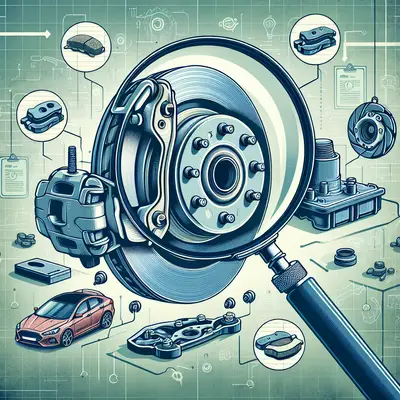
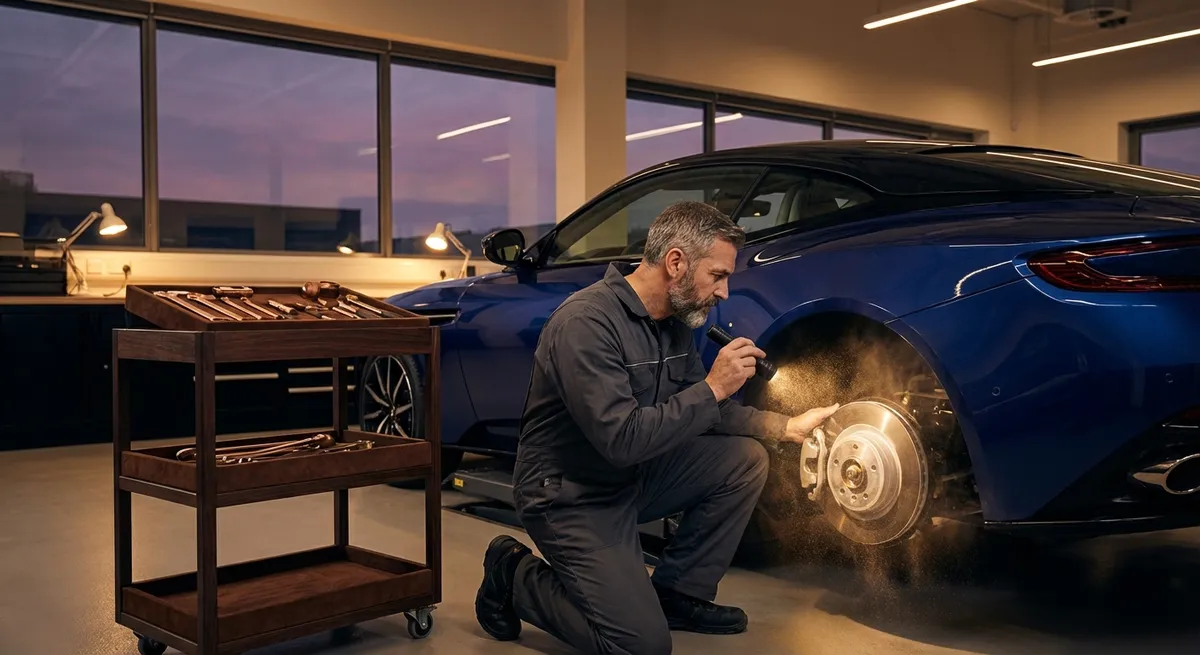
A meticulous brake service goes beyond measuring rotor thickness alone. It includes assessing surface finish, checking for hotspots (areas of discoloration from excessive heat), and verifying minimal runout (the degree to which the rotor deviates from perfect rotation). When rotors are within specification but lightly uneven, a high‑quality resurfacing performed on-car can restore uniformity and reduce pulsation. Conversely, rotors that are technically “legal” but display heat spots and fine cracks may be better replaced if you prioritize a refined, vibration‑free brake feel. Communicating that you value smoothness and predictability—even over minimum legal limits—helps ensure the parts and methods chosen reflect your higher standard.
Calipers, Slides, and Hardware: The Understated Architecture of Consistent Braking
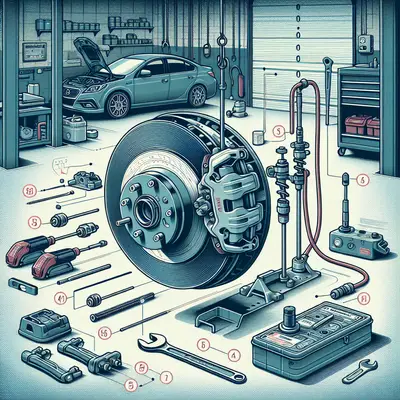
Brake calipers, guide pins, and anti‑rattle hardware rarely feature in basic maintenance conversations, yet they play a silent but crucial role in how your brakes feel and wear over time. A pad that moves freely and returns cleanly after each brake application reduces noise, prevents dragging, and ensures even contact with the rotor. In contrast, dry or corroded slide pins can cause one pad to wear significantly faster than the other, produce pulling under braking, or generate heat that accelerates fluid degradation.
An elevated maintenance approach insists on a comprehensive hardware inspection with every brake service. That includes cleaning and lubricating slide pins with high‑temperature, brake‑specific lubricant; replacing worn or bent pad clips; and inspecting rubber boots for cracks that allow moisture intrusion. For vehicles in harsh climates or where road salt is common, this becomes especially critical. Systematic attention to hardware preserves the precision engineered into your braking system and extends the intervals between major repairs by reducing uneven wear and unnecessary stress on calipers and rotors.
Anticipatory Maintenance for Heat and Load Conditions
Not all braking environments are equal. City commuting, spirited weekend drives on winding roads, and towing a trailer uphill each impose different thermal and mechanical loads on your brakes. Drivers who regularly push their vehicles—even within legal speed limits—benefit from thinking about brake maintenance in terms of heat management and anticipated load rather than mileage alone.
Heavy or repeated braking generates significant heat that can glaze pads, alter rotor metallurgy, and accelerate fluid degradation. For vehicles frequently used in mountainous terrain, with full passenger loads, or in hot climates, measuring pad thickness and rotor condition proactively—before the manufacturer’s standard service intervals—becomes a form of anticipatory risk management. Discussing your real‑world driving profile with a trusted shop can lead to tailored recommendations: slightly more robust pad compounds, rotors designed for better heat dissipation, or more frequent fluid changes. This is not performance driving vanity; it is a deliberate alignment of maintenance with the actual demands placed on your brake system.
Conclusion
Truly reliable braking is not the result of last‑minute repairs but of thoughtful, recurring attention to detail. When pedal feel becomes a diagnostic tool, brake fluid is treated as a precision hydraulic medium rather than an afterthought, rotor surfaces are evaluated for quality instead of mere legality, hardware is maintained with rigor, and service intervals are adjusted to real‑world driving demands, brake care rises to a higher standard.
This is the difference between simply stopping and stopping with assurance. For the discerning driver, that quiet confidence is not optional—it is the foundation of every mile driven.
Sources
- [National Highway Traffic Safety Administration (NHTSA) – Brakes and Brake Safety](https://www.nhtsa.gov/equipment/brakes) - Federal guidance on brake safety, system components, and common failures
- [AAA – How to Know When You Need New Brakes](https://www.aaa.com/autorepair/articles/how-to-know-when-you-need-new-brakes) - Practical overview of brake wear symptoms and service considerations
- [U.S. Department of Energy – Vehicle Maintenance and Safety](https://afdc.energy.gov/conserve/maintenance) - Explains how proper maintenance, including brakes, affects efficiency and safety
- [Continental Brakes – Brake Fluid Information](https://www.continental-aftermarket.com/en-us/passenger-cars-and-vans/brake-systems/brake-fluid) - Technical insight into brake fluid types, moisture absorption, and service intervals
- [Brembo – Myths and Truths About Brake Discs](https://www.brembo.com/en/company/news/brake-discs-myths-and-truths) - Detailed discussion of rotor “warping,” thickness variation, and surface quality
Key Takeaway
The most important thing to remember from this article is that this information can change how you think about Maintenance.