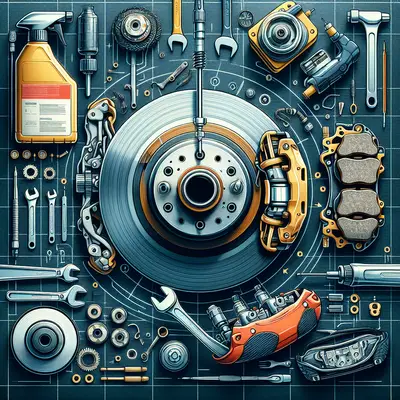
Brake repair is often treated as a crisis purchase—something you confront only when the grinding becomes unbearable or the warning light finally wins the argument. Yet discerning drivers know that a vehicle’s braking system rewards early, informed attention with something far more valuable than cost savings: composure, predictability, and quiet confidence every time the pedal is pressed.
This guide reframes brake repair as a deliberate craft rather than a rushed transaction. Instead of focusing on quick “tips,” it offers five exclusive, refined insights that help safety‑conscious owners work more intelligently with both their vehicle and their technician. The aim is simple: to elevate every stop from merely adequate to assured.
Understanding Brake Feel as a Diagnostic Tool
Most drivers rely on warning lights or audible noise to signal brake trouble. A more sophisticated approach begins much earlier, with brake “feel.” The pedal, steering wheel, and even your seat rail transmit feedback long before the system reaches a critical state.
A consistent, firm pedal that responds proportionally to pressure is the baseline. Any change—sponginess, a longer pedal travel, or a pulse under light braking—is a message. Spongy feel often indicates air or moisture in the brake fluid, while a low pedal can hint at pad wear, a leak, or rear brake misadjustment in some configurations. A steering wheel that shudders under moderate braking at highway speeds can point to rotor thickness variation or uneven deposits rather than simply “warped rotors,” as they’re commonly called.
Treat these sensations as early‑stage diagnostics. Keep a mental record of what “normal” feels like in your car when it is freshly serviced. When something deviates, you can describe it with precision to a professional: “The pedal began to feel softer over two weeks,” or “There’s a light vibration only between 45–60 mph.” This level of detail helps your technician pinpoint causes more efficiently and reduces the risk of guesswork repairs.
The Hidden Architecture: Matching Parts to Driving Style
Brake pads and rotors are not commodities; they are components in a carefully balanced system. Two cars leaving the factory with identical brakes may require different replacement strategies depending on how, where, and by whom they are driven.
For urban, stop‑and‑go driving, a premium ceramic pad often offers quieter operation and less brake dust, with stable friction over typical city temperatures. For frequent highway or mountain driving, a high‑quality semi‑metallic pad may offer better performance at higher temperatures—especially during long downhill stretches where heat management becomes critical. The rotor’s metallurgy and design matter as well: a quality, plain rotor is often preferable to flashy drilled components that can introduce noise or cracking if poorly made or mismatched to the application.
Refined brake repair is about synergy, not spectacle. When consulting with a shop, ask how the recommended pad compound suits your actual driving pattern—city, highway, towing, high‑speed, or mixed. A premium outcome is not necessarily the most expensive part on the shelf, but the configuration that maintains consistent stopping power in the real world conditions you face every week.
Fluid, Lines, and Heat: The Underestimated Half of Brake Safety
Brake pads and rotors receive most of the attention, but fluid and lines quietly determine how reliably your braking force travels from pedal to caliper. Neglect in this area rarely announces itself until performance has already diminished.
Brake fluid is hygroscopic; over time, it absorbs moisture from the air, lowering its boiling point and increasing the risk of vapor formation under heavy braking. This can manifest as a fading pedal during repeated stops—a particular concern on long downhill drives or in spirited driving. Periodic fluid changes, as recommended by the vehicle manufacturer (often every 2–3 years), restore the system’s thermal resilience. This is not merely “nice to have”; it is a crucial safety practice for anyone who drives in hilly regions, tows, or frequently brakes from higher speeds.
Brake lines and hoses form the plumbing of the system. Rubber hoses can swell internally with age, giving the pedal a soft feel and causing calipers to release sluggishly. Corroded metal lines pose an even more serious risk: an unexpected line rupture under hard braking can drastically reduce braking capacity at the worst possible moment. During any significant brake service, request an explicit inspection of the condition of flexible hoses, hard lines, and fittings, especially in climates where road salt is used. An elegant repair is one that considers both the visible friction surfaces and the hidden hydraulic pathways that make them work.
Precision in Bedding and Break‑In: The Art After the Repair
Even the best brake components perform below their potential if they are not properly “bedded in”—a controlled procedure that mates pad material to the rotor surface and stabilizes friction characteristics. This is the step that quietly separates a merely replaced brake system from one that feels refined, linear, and composed.
Modern pads often come with manufacturer‑recommended bed‑in processes, which usually involve a series of progressively harder stops from moderate speeds, followed by a cooling period. The goal is to transfer a uniform layer of pad material to the rotor face, reducing hotspots, minimizing noise, and preventing the uneven deposits that contribute to future vibration. Skipping this step can lead to early complaints of shudder, lackluster bite, or noisy operation even when high‑quality parts were used.
If you are not performing the work yourself, ask the shop how they handle post‑installation bedding and what they recommend for the first 200–300 miles. A thoughtful approach often includes: avoiding hard, emergency‑style stops unless truly necessary; refraining from extended pedal pressure while at a complete stop immediately after aggressive braking; and allowing the brakes to cool between heavy applications. This is the finishing touch that allows your investment in quality parts and labor to reach its full potential.
Five Exclusive Insights for the Safety‑Focused Owner
For drivers who view brake performance as non‑negotiable, these five insights provide a more elevated ownership experience—one in which safety and sophistication coexist.
- Use consistent routes as your personal test track.
Choose a familiar stretch of road and note how your car stops from the same speed under similar conditions every few weeks. Variations in pedal effort, stopping distance, or noise stand out more clearly when the environment is constant.
- Time your maintenance to your driving calendar, not just the odometer.
If you know you will be heading into a season of heavy driving—mountain trips, summer road travel, or winter conditions—schedule brake inspections before, not after, those demands. This shifts you from reactive maintenance to curated readiness.
- Treat small noises as early invitations, not late alarms.
A faint chirp or scrape that appears intermittently is often the first indicator of wear tabs contacting rotors or of pad movement in the hardware. Addressing these sounds promptly can prevent rotor damage and avoid the need for more invasive repair.
- Ask for measurements, not just replacements.
During service, request actual rotor thickness readings, pad thickness measurements, and fluid condition assessments (such as moisture content where available). Keeping these noted in your records lets you see trends over time and decide whether to act now or at the next interval—an approach more suited to a connoisseur than a casual owner.
- Evaluate the whole stop, not just the parts.
After any brake work, pay attention to how the entire vehicle behaves: nose dive, rear stability, steering feel under braking, and tire grip. Sometimes what feels like a “brake issue” is actually tire compound, suspension wear, or alignment. A refined diagnostic mindset keeps you from repeatedly fixing the wrong component.
Conclusion
Exceptional braking is never an accident. It is the product of attentive listening to brake feel, careful parts selection aligned with real‑world driving, respect for fluid and line condition, and meticulous post‑service bedding and evaluation. For owners who view their vehicle as an extension of their standards, these practices transform brake repair from a reluctant expense into a quietly confident expression of care.
Approach each service not with urgency, but with intention. When you do, every carefully modulated stop becomes a confirmation that safety, refinement, and mechanical integrity are working together—exactly as they should.
Sources
- [National Highway Traffic Safety Administration (NHTSA) – Brakes and Safety](https://www.nhtsa.gov/equipment/brakes) – Overview of brake system safety, components, and recall information from a U.S. government agency.
- [U.S. Department of Transportation – Brake Safety Resources](https://www.transportation.gov/mission/safety) – Broader federal safety guidance, including braking and vehicle safety campaigns.
- [AAA – Car Brake System: How It Works and How to Maintain It](https://www.aaa.com/autorepair/articles/car-brake-system) – Consumer‑focused explanation of brake components, wear indicators, and maintenance best practices.
- [University of Nebraska–Lincoln – Automotive Brake Systems Training Materials](https://extension.unl.edu/statewide/douglas-sarpy/Automotive-Brakes.pdf) – Educational overview of brake operation, hydraulics, and diagnostic fundamentals.
- [Brembo – Technical Insights on Brake Pads, Rotors, and Bedding](https://www.brembo.com/en/company/news/best-practices-for-bedding-in-new-brake-pads-and-rotors) – Manufacturer guidance on best practices for premium brake component selection and proper bed‑in procedures.
Key Takeaway
The most important thing to remember from this article is that this information can change how you think about Repair Guides.