For the driver who notices the subtle shift in pedal feel before the warning light ever appears, brake repair is not a crisis—it’s a craft. When understood properly, your braking system becomes less of a mystery and more of a precision instrument you can steward with confidence. This guide is designed for owners who care deeply about the integrity, quietness, and predictability of every stop—and who want their repair decisions to reflect that standard.
Understanding Brake Repairs as a System, Not a Single Part
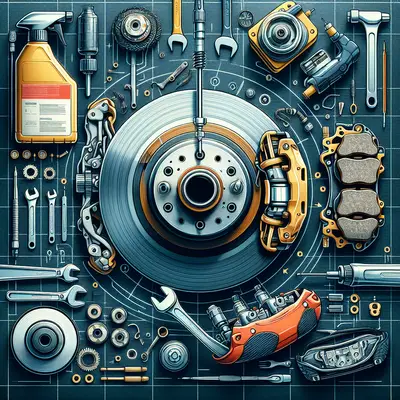
Many repair conversations begin and end with brake pads, but the car never stops on pads alone. A sophisticated approach starts with seeing the brake system as an orchestration of components: pads, rotors, calipers, hoses, brake fluid, master cylinder, and electronic assist systems such as ABS and stability control.
When one element is neglected, another is forced to compensate. Worn pads can overheat rotors; tired fluid can compromise ABS performance; a sticky caliper can distort brake balance from left to right. Rather than authorizing “just pads,” the discerning owner asks for a system-level evaluation: pad thickness, rotor runout, fluid condition, hose integrity, caliper slide movement, and scan-tool diagnostics where applicable.
This systems mindset turns “pad replacement” into brake restoration. The goal is not merely to pass a safety inspection, but to restore the vehicle’s original braking character—linear pedal feel, quiet operation, and stable behavior in emergency stops.
The Anatomy of a Thoughtful Brake Repair Visit
Arriving at a shop with clarity transforms the repair conversation. Before handing over the keys, articulate what you’re feeling, not just what you think is broken. A sophisticated description might include: changes in pedal travel, when noises occur (first stop of the morning vs. after highway driving), steering wheel vibration, or a pull to one side under braking.
Instead of approving an open-ended “brake job,” request a documented inspection that separates what is safety-critical from what is advisory. Ask for measurements: pad thickness in millimeters, rotor thickness compared to the minimum specification, rotor runout values, and brake fluid test results. This anchors the conversation in data, not impressions.
A premium-level brake repair is also transparent about parts choices. OEM-equivalent or high-quality aftermarket components often deliver better consistency, noise control, and pedal feel than bargain alternatives. And above all, insist on torque specs in writing for wheels and caliper hardware—a small detail that has a disproportionate impact on longevity and refinement.
Exclusive Insight #1: “Brake Feel” Is a Diagnostic Tool, Not a Preference
Most drivers treat brake feel as a matter of taste: firm vs. soft, aggressive vs. gentle. The more disciplined approach is to treat it as a diagnostic instrument you use every time you drive.
A gradually softening pedal can signal brake fluid degradation or a tiny leak long before it becomes obvious. A firmer-than-usual pedal after recent work can hint at improperly lubricated caliper slides or pad compounds incompatible with your driving style. A slightly delayed engagement—the first inch of pedal travel doing “nothing”—may reveal air in the system or excessive pad knock-back from warped or misaligned rotors.
Consciously noting these nuances, especially right after any brake repair, allows you to detect whether the system has been genuinely improved or merely altered. Mentally “bookmark” how your brakes feel on a cool morning, in stop-and-go traffic, and on a long downhill. Any material deviation over time becomes an early warning, not an unwelcome surprise.
Exclusive Insight #2: Quiet Brakes Begin with Rotor and Hub Preparation
Squeal and vibration are often blamed on “cheap pads,” but the true culprit is frequently the unseen surface beneath them. For the refined driver, rotor and hub preparation is non-negotiable.
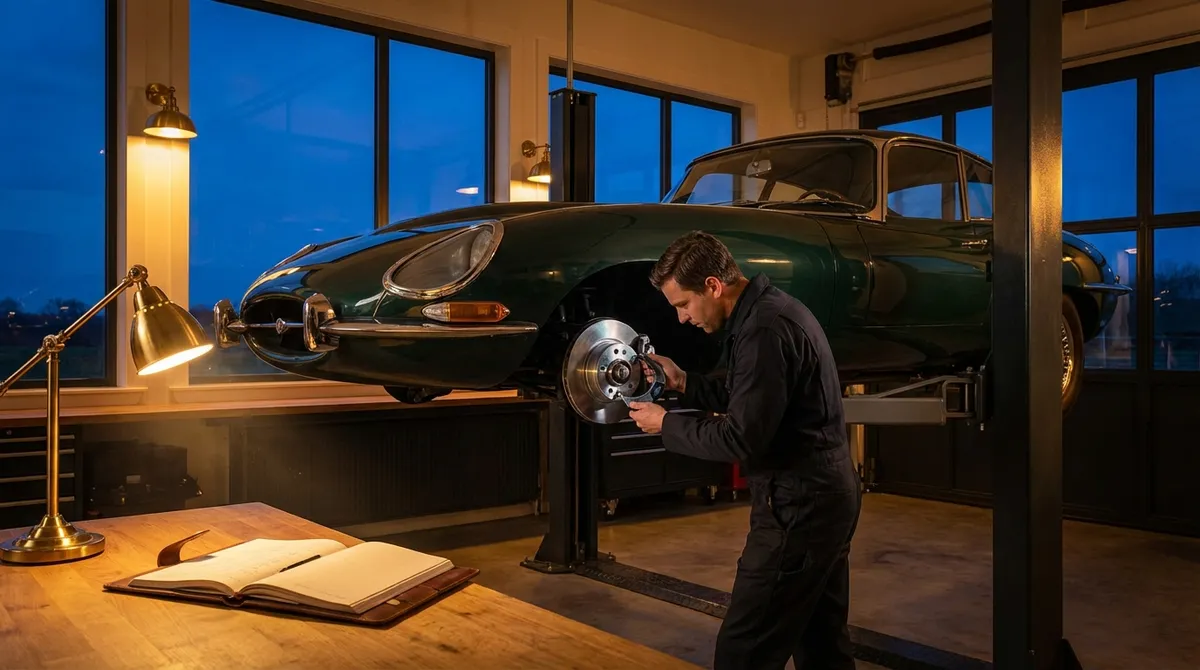
When rotors are installed on a dirty or corroded hub, even a thin layer of rust or debris can create lateral runout—an almost imperceptible wobble that leads to uneven pad contact. Over time, this irregular contact can cause brake judder, pulsation in the pedal, and glazing that invites noise. A sophisticated repair process includes meticulous hub cleaning, rotor indexing (rotating the rotor on the hub to minimize runout), and verifying runout with a dial indicator.
Attention to chamfered pad edges, proper application of high-temperature brake lubricant only where specified, and ensuring pad backing plates can move freely in the caliper bracket complete the recipe for composed, quiet stops. This is not decor—it is the difference between brakes that are merely functional and brakes that feel engineered.
Exclusive Insight #3: Brake Fluid Is Your Most Overlooked Safety Component
Oil changes are routine; brake fluid service is too often an afterthought. Yet brake fluid has a direct influence on pedal consistency and emergency stopping performance, particularly under repeated or high-speed braking.
Brake fluid is hygroscopic—it absorbs moisture over time. As water content rises, the boiling point of the fluid falls. Under hard braking, that trapped moisture can vaporize, producing compressible gas bubbles in the lines. The result is a spongy pedal or, in extreme cases, sudden fading of braking power exactly when you demand the most from the system.
A premium maintenance standard includes periodic brake fluid testing (via a boiling point tester or at least a moisture-content meter) and a complete system flush according to manufacturer guidelines or sooner if the vehicle sees frequent high-load use, mountain driving, or towing. The difference is subtle in daily commuting, but unmistakable when you need precise, confidence-inspiring pedal response at the edge of the vehicle’s capabilities.
Exclusive Insight #4: Brake Balance Matters as Much as Brake Strength
Many owners focus on “how hard” the car can stop, measured in distance or deceleration. Equally critical is how evenly each corner of the vehicle participates in that stop. This is brake balance: the harmony between front and rear, and left and right.
An unevenly worn set of pads can signal more than age; it can expose a dragging caliper, sticky slide pins, or a partially collapsed brake hose affecting pressure delivery. The tuned owner asks the shop to show pad wear patterns from each wheel and to comment on any asymmetry. Left-front pads worn significantly more than right-front, for instance, deserve explanation, not dismissal.
ABS and stability control systems can mask subtle imbalances during regular driving, but under repeated or hard braking, these irregularities can manifest as instability, longer stopping distances, or a car that feels “nervous” when you are slowing quickly on a curve. Treating brake repairs as an opportunity to restore balance—not just pad depth—elevates both safety and driving composure.
Exclusive Insight #5: Post-Repair Bedding Is the Final, Critical Step
Even the best components cannot perform at their peak without proper bedding, the controlled process of integrating new pads and rotors. Yet this final stage is often omitted, rushed, or left entirely to chance.
Bedding involves a series of moderate-to-firm stops from increasing speeds, without coming to a complete halt and without holding the brakes on at rest while components are extremely hot. The purpose is to evenly transfer a thin, uniform layer of pad material onto the rotor surface, stabilizing friction characteristics and greatly reducing the likelihood of judder and noise.
For the meticulous owner, this is not an optional ritual—it is embedded in the repair plan. Ask your technician whether they perform initial bedding on a test drive, and then complete the process yourself following a carefully outlined procedure from the pad manufacturer or vehicle maker. The outcome is brakes that feel polished rather than raw: linear, quiet, and consistent from the first stop of the day to the last.
Elevating Your Standard for Every Brake Repair
The refined approach to brake repairs is not about turning you into a technician; it is about upgrading the questions you ask and the standards you accept. You move from “Do I need brakes?” to “Has my braking system been restored to its designed character—in feel, balance, quietness, and reliability?”
By treating brake feel as diagnostic, insisting on meticulous rotor and hub preparation, respecting brake fluid as a primary safety component, monitoring brake balance, and completing a disciplined bedding process, you transform routine service into genuine safety engineering.
In the end, your reward is not just shorter stopping distances. It is the calm assurance that every press of the pedal will behave as expected—undramatic, precise, and composed. That is the true hallmark of brake repairs done to a higher standard.
Sources
- [National Highway Traffic Safety Administration (NHTSA) – Braking and Stopping](https://www.nhtsa.gov/equipment/brakes) - Federal safety information on braking systems, performance, and regulations
- [U.S. Department of Transportation – Brake Safety Resources](https://www.transportation.gov/mission/safety) - Broader safety context, including braking as a critical component of vehicle safety
- [University of Nebraska–Lincoln – Fundamentals of Vehicle Braking](https://digitalcommons.unl.edu/cgi/viewcontent.cgi?article=1153&context=mechengfacpub) - Technical overview of braking dynamics and system behavior
- [Bosch Automotive – Brake System Components and Function](https://www.boschautoparts.com/en/auto/brakes) - Detailed explanations of modern brake components and their roles
- [Continental Automotive – Brake Fluid Basics](https://www.continental-automotive.com/en-gl/Passenger-Cars/Brake-Systems/Brake-Fluid) - In-depth information on brake fluid properties, moisture absorption, and maintenance recommendations
Key Takeaway
The most important thing to remember from this article is that this information can change how you think about Repair Guides.