Precision braking is not an indulgence; it is the quiet foundation of every composed journey. For drivers who demand more than “good enough,” brake repair is less about reacting to problems and more about curating a predictable, controlled driving experience. This guide moves beyond basic checklists and explores how discerning owners can approach brake repair with the same care they bring to every other significant investment in their lives.
Below, you’ll find a structured, premium-level perspective on brake repair—culminating in five exclusive insights that safety‑minded owners can use to elevate every decision made at the service bay.
Understanding Your Brake System as an Integrated Safety Network
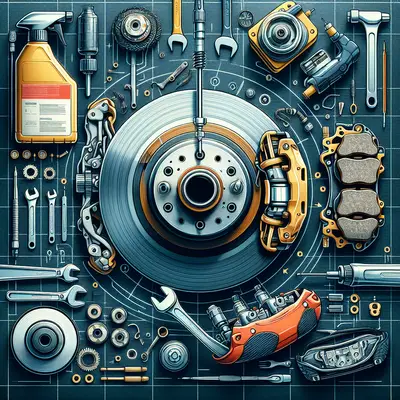
Thinking of your brakes as “pads and rotors” undersells how complex and interconnected modern systems have become. On most contemporary vehicles, the braking system is a network: hydraulic components, friction surfaces, electronic controls, and software all working in unison. Anti-lock braking (ABS), electronic brake-force distribution (EBD), stability control, and advanced driver-assistance systems often share sensors and control modules with the core brake hardware.
When you authorize brake repair, you are not simply installing new parts; you are preserving the integrity of this entire network. A poorly bled hydraulic system can confuse ABS. A mismatched rotor and pad compound can disrupt carefully engineered brake balance. Even small deviations—incorrect torque on caliper bolts, contaminated fluid, or ignoring a warped rotor—can ripple through the system and subtly degrade safety. Approaching brake repair as an integrated system service rather than a parts swap primes you to ask better questions and insist on better work.
Crafting a High-Standard Brake Repair Brief for Your Technician
Sophisticated brake care begins before the first wheel comes off. Arrive at the service center with a clear, well-organized description of your vehicle’s behavior. Note when symptoms appear: cold versus hot brakes, only at highway speeds, during long downhill sections, or exclusively in stop‑and‑go traffic. Identify whether the issue is tactile (pedal pulsation, fade, vibration), auditory (squeal, grind, groan), or visual (pulling, uneven pad wear, fluid on the inside of a wheel).
A refined service brief does two things. First, it shortens diagnostic time and reduces the risk of guesswork. Second, it signals that you expect methodical, not hurried, work. Ask the shop to document pad thickness, rotor runout, fluid condition, and caliper operation. Request that any replaced parts be retained for your inspection. You are not challenging the technician’s expertise; you are defining a shared standard of thoroughness that protects both of you.
Material Choices: How to Align Brake Components with Your Driving Standard
For the discerning driver, “OEM or cheapest available” is an unhelpful binary. Friction materials and rotors are not commodities; they are tuned instruments. Original equipment (OE) or high-quality equivalent components are generally engineered to balance bite, noise, dust, and longevity for everyday driving. However, within that broad category are nuances that matter if you care about feel and consistency.
Pads range from organic and semi‑metallic to ceramic and performance‑oriented compounds, each with different temperature windows, noise characteristics, and wear patterns. Rotors vary in metallurgy, coating quality, and manufacturing precision. Choosing a pad that is too aggressive for your rotor can increase noise and wear; choosing one too mild can lengthen stopping distances when heated. A sophisticated approach is to match your components to your actual driving: frequent high-speed travel, mountain descents, city congestion, or mostly suburban commutes. This is where a quality shop earns its reputation—by specifying parts that suit your use case, not just their inventory.
The Repair Experience: What Premium-Grade Brake Service Feels Like
Exceptional brake repair has a signature feel. The pedal should be firm yet progressive, free of sponginess or sudden “steps” as you modulate pressure. The car should remain stable under hard braking: no pulling, no steering corrections required, and no noticeable shudder through the wheel or seat. As the brakes warm through normal driving, any initial noises from bedding-in should diminish quickly rather than persist.
A refined owner also pays attention to post-repair rituals. The best shops provide clear bedding-in instructions, outline expected changes in feel during the first few hundred miles, and schedule a complimentary follow-up inspection to verify even wear and confirm there are no leaks, noise issues, or hot spots. This aftercare is not an upsell; it is an expression of confidence in the work performed and a safeguard for your safety.
Five Exclusive Insights for Owners Who Refuse to Compromise on Brake Safety
Below are five often-overlooked but highly consequential insights that elevate brake repair from routine maintenance to a disciplined safety strategy.
1. Treat Brake Fluid as a Precision Component, Not a Consumable
Brake fluid quietly carries much of your stopping power. It is hygroscopic, meaning it absorbs moisture over time, which lowers its boiling point and can cause internal corrosion. Under repeated hard stops or long descents, degraded fluid can boil, introducing compressible vapor into the system and producing a soft pedal or severe fade at precisely the wrong moment.
Sophisticated owners treat fluid changes as time-based, not mileage-based, maintenance—often every 2–3 years or according to the manufacturer’s guidance, regardless of how far the car has traveled. Insist on a full system flush (not just topping off), and ask what specification of fluid is being used (DOT 3, 4, or manufacturer-specific). This is a small, relatively inexpensive service that delivers disproportionately large gains in consistency and safety.
2. Demand Measured Evidence: Rotor Runout and Thickness, Not Just Visual Checks
Premium brake service moves beyond “That looks fine.” Two measurements in particular—rotor runout (how much the rotor wobbles as it rotates) and rotor thickness variation—directly influence pedal feel and long-term comfort. Excessive runout or uneven thickness can cause pedal pulsation and premature pad wear, even if the components are otherwise new.
A refined owner is fully justified in asking the shop whether they measured runout and thickness and what values they observed relative to the manufacturer’s limits. You do not need to memorize the numbers; you need to hear that the technician knows them and respects them. This attention to specification separates meticulous brake work from merely adequate repairs.
3. View Brake Wear Patterns as a Health Report, Not Just a Replacement Signal
When your pads and rotors are replaced, they carry a story. Uneven pad wear from inner to outer, diagonal wear across the contact surface, or discoloration on the rotor can all suggest underlying issues: sticking caliper slides, seized pistons, improper torque on mounts, or chronic overheating from driving conditions.
Ask your technician for a brief interpretation of the old parts. Why did they wear the way they did? Is there anything about your driving, your routes, or your maintenance intervals that might be adjusted to promote healthier wear in the future? Treating brake wear as diagnostic feedback, rather than a simple end-of-life indicator, allows each repair to improve the next interval of ownership.
4. Integrate Brake Repair with the Vehicle’s Electronic Safety Suite
In many modern vehicles, brake components are deeply integrated with safety electronics. Wheel speed sensors, stability control modules, and ABS hardware often live in the same ecosystem as your friction components. A fluid leak or caliper issue may present first as an ABS warning light. Conversely, a failing sensor can cause the system to disable electronic aids, leaving you with a mechanically functional but electronically compromised braking system.
Whenever significant brake work is performed, a premium approach includes scanning the vehicle for stored fault codes, verifying ABS and stability systems initialize correctly, and confirming there are no lingering warnings. This is especially important after any work near wheel hubs or sensors. Insist that the shop confirm all brake-related electronics are operational; in today’s cars, mechanical and electronic safety are inseparable.
5. Establish a Personal Brake Baseline and Re-Evaluate After Every Repair
Most owners adapt unconsciously to gradual changes in brake performance. A slightly longer stopping distance or minor vibration becomes “normal” over time. A more deliberate approach is to create your own reference benchmark: a familiar stretch of road where you pay close attention to pedal feel, response, and noise under consistent, safe braking conditions.
After any brake repair, revisit this same scenario once the components have been properly bedded in. Note any differences—improved linearity, reduced noise, altered initial bite. If something feels off or inconsistent with expectations, return to the shop promptly, while the work is recent and backed by warranty. This cultivated awareness turns you into an early warning system for subtle issues that might otherwise go unnoticed until they become more serious problems.
Conclusion
Brake repair, handled thoughtfully, is less a chore and more a continuous refinement of your car’s most important safety system. By understanding your brakes as an integrated network, articulating clear expectations to your technician, selecting components with intent, and applying disciplined follow-through, you transform routine service into a high-standard safety practice.
For drivers who hold their vehicles to a premium standard, the measure of success is not merely passing inspection. It is the calm, predictable, unhurried stop—every time, in every condition. That level of confidence is not accidental; it is engineered, one informed repair decision at a time.
Sources
- National Highway Traffic Safety Administration (NHTSA) – Brakes and Safety - Overview of brake system safety, recalls, and regulatory context
- U.S. Department of Transportation – ABS and Stability Control Information - Explains how ABS and stability control integrate with braking systems
- AAA – Understanding Your Car’s Braking System - Consumer-focused explanation of brake components and maintenance
- University of Nebraska–Lincoln – Brake System Basics (Extension Publication) - Educational overview of brake hydraulics, friction, and safety considerations
- Bosch Mobility – Brake Systems Technology - Technical insight into modern brake and electronic safety system integration
Key Takeaway
The most important thing to remember from this article is that this information can change how you think about Repair Guides.