Modern braking isn’t merely a mechanical act; it is a choreography of friction, hydraulics, and control systems working in millisecond harmony. For discerning drivers, “good enough” stops are not acceptable—only predictable, consistent, and elegant deceleration will do. This guide is designed for owners who want more than basic instructions; it is for those who view brake repair as an exercise in precision and responsibility, not a reluctant expense.
Below, you’ll find a structured approach to understanding and executing brake repairs with a standard that matches the sophistication of today’s vehicles. Woven through this guide are five exclusive insights that elevate your decision-making and keep you firmly in command of your stopping power.
Understanding Modern Brake Systems with a Precision Mindset
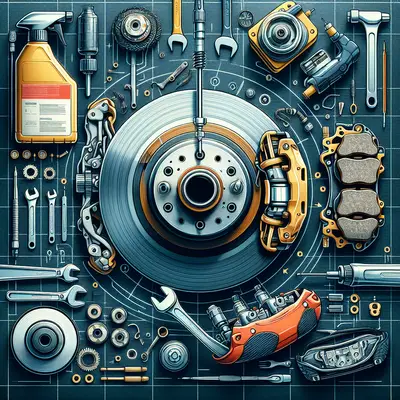
A refined approach to brake repair begins with an accurate mental model of the system you are maintaining. A contemporary brake system combines mechanical hardware (pads, rotors, calipers), hydraulic components (master cylinder, lines, fluid), and electronic controls (ABS, stability systems, brake assist) into a tightly calibrated network.
The key is to appreciate how small deviations can have outsized effects. A slightly sticky caliper slide can skew braking balance and prematurely wear one side of the pad. A marginally warped rotor can trigger subtle steering wheel vibration that, if left unaddressed, evolves into longer stopping distances. Low-quality replacement parts can also alter pedal feel and fade resistance, undermining the vehicle’s original engineering.
Driving with a premium standard means treating every symptom—unusual pedal travel, faint pulsation, or minimal increase in stopping distance—as data. Instead of viewing repair as “fixing what’s broken,” adopt the stance of restoring the brake system to its intended performance envelope, or better.
Exclusive Insight #1: Reading Your Rotors Like a Professional
Most owners glance at rotors only to see if they are “too thin” or visibly scored. A more elevated inspection extracts far more information.
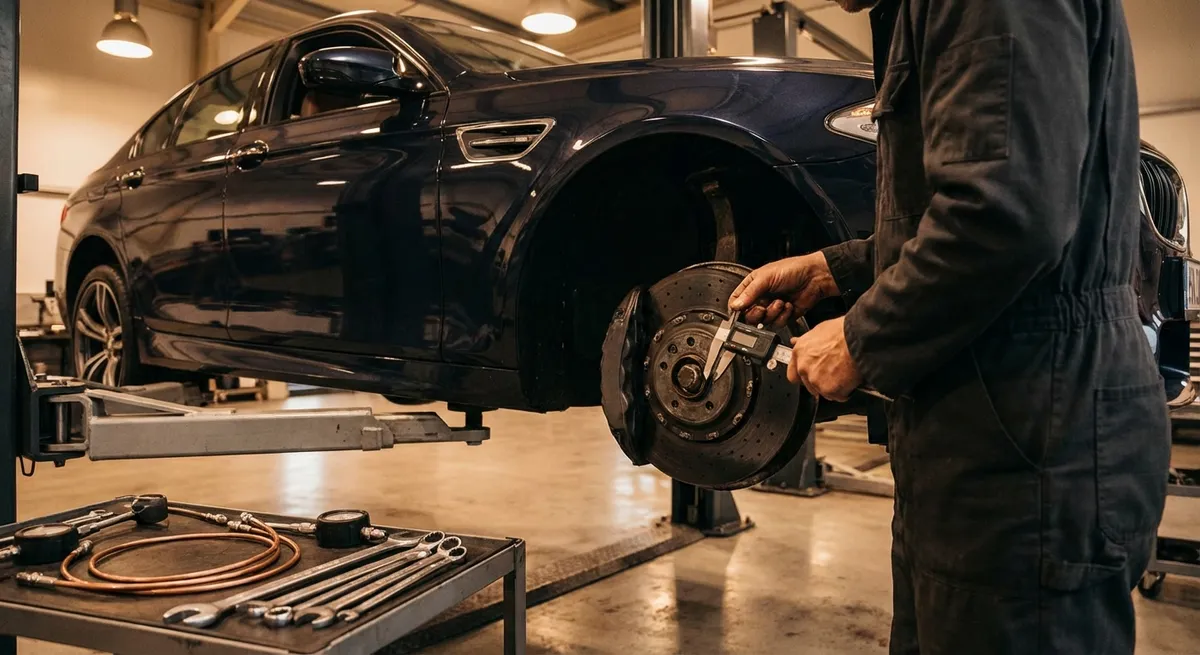
A rotor’s surface can quietly reveal your braking habits, system health, and repair needs. Light, uniform scoring indicates typical wear, but deep grooves in specific zones can signal a seized pad or sticky caliper. Blue or purple discoloration often reveals overheating from aggressive or repeated hard stops—or a dragging brake that never fully releases. Small radial cracks near drilled or slotted features may indicate thermal stress that demands timely replacement.
Moreover, pay attention to how wear presents between left and right sides. A mirror-like finish on one rotor and a matte, roughened finish on its counterpart often points to imbalances in pad material transfer or caliper operation. Instead of only measuring thickness with a micrometer, treat rotor inspection as a narrative: how is heat being managed, how evenly is friction being applied, and how gracefully has the system handled your driving demands?
Precision Parts Selection: Matching Components to Your Driving Style
Your choice of pads, rotors, and hardware is where a refined brake repair truly distinguishes itself from a routine job. Original equipment (OE) components are engineered for a specific blend of comfort, noise control, dust levels, and stopping power. Aftermarket options can subtly—or dramatically—shift that balance.
Ceramic pads, for instance, often provide quieter stops and less dust, making them attractive for drivers who value cleanliness and low noise. Semi-metallic pads may offer superior high-temperature performance but can introduce more noise and rotor wear. Performance-oriented rotors with slots or drilling can improve gas and dust evacuation in spirited driving, but they must be chosen from reputable manufacturers to avoid premature cracking or inconsistent performance.
A sophisticated approach aligns parts with actual usage: a heavy SUV frequently driven in urban traffic requires a very different friction profile than a light sedan used mostly on highways. Treat the parts counter not as a price-shopping exercise but as a specification decision. You are making a choice about how your car will stop in an emergency, in the rain, at the end of a mountain descent, and during years of daily commutes.
Exclusive Insight #2: Calipers and Hardware as the Hidden Guardians of Pedal Feel
Most owners obsess over pads and rotors while treating hardware and calipers as an afterthought. That is a costly oversight if your aim is truly confident braking.
Caliper function directly governs even pressure distribution. Corroded caliper slide pins, degraded boots, and tired piston seals may not fail catastrophically, but they do degrade performance in a quiet, cumulative way. You might experience slightly irregular pad wear, mild pulling to one side, or a vague sense that the car does not respond as crisply to quick pedal inputs. Over time, those subtleties become increased stopping distance.
Premium brake repair prioritizes the small elements: replacing slide pin boots, properly cleaning and lubricating guide pins with high-temperature brake grease, renewing anti-rattle clips and abutment hardware, and ensuring caliper pistons retract smoothly. This attention to detail often makes the difference between a brake job that feels “fine” and one that feels factory-fresh—or better.
Fluid, Lines, and Heat: Protecting the System from the Inside Out
While pads and rotors are visible, brake fluid and lines are the quiet custodians of consistency. Brake fluid is hygroscopic, meaning it absorbs moisture over time. That water content lowers the boiling point; under hard braking, fluid can boil and introduce compressible vapor, creating a soft or sinking pedal. This isn’t only a track-driver concern—steep mountain roads, heavy towing, or repeated panic stops can generate enough heat to expose marginal fluid.
A refined brake maintenance philosophy includes periodic fluid testing or replacement based on manufacturer intervals or measured moisture content. During repairs, inspect rubber hoses for swelling, cracking, or wetness that suggests leaks. On older vehicles or those in corrosive climates, metal lines deserve careful attention for rust and pitting.
Protecting your system from within is about preserving hydraulic integrity. A precisely bled system with fresh, high-quality fluid can transform pedal tactility and provide confidence that the braking force you request with your foot translates immediately and consistently to the wheels.
Exclusive Insight #3: The Bedding-In Ritual as Performance Insurance
Brake pad and rotor “bedding” is often misunderstood as an optional or purely performance-oriented step. In reality, it is one of the most effective ways to secure quiet operation, consistent friction, and extended component life.
When new pads and rotors are installed, microscopic asperities on both surfaces gradually shear and conform under heat and pressure. A controlled bedding process—progressively bringing the brakes up to temperature with a series of moderate decelerations, then allowing them to cool—encourages an even transfer layer of pad material onto the rotor surface. This transfer layer stabilizes friction, minimizes hotspots, and reduces the risk of judder.
Skipping this ritual can lead to uneven deposits, rotor “hot spots,” and premature noise or vibration, especially with performance-oriented compounds. Incorporating a proper bedding sequence after installation is not theatrics; it is an elegant, engineer-approved way to ensure the system performs as a cohesive, predictable unit.
Diagnostics by Feel, Sound, and Smell: Elevating Your Sensory Awareness
One of the quiet advantages of a conscientious driver is the ability to sense subtle changes before they escalate into failures. While diagnostic tools and inspection routines are essential, your senses are often the first line of defense.
A refined diagnostic mindset treats minor variations as early warnings: a faint high-pitched squeal only when braking lightly downhill, a barely noticeable vibration between 50–60 mph during braking, or a pedal that feels marginally softer on humid days. None of these should be dismissed as “probably nothing.” Instead, they warrant a calm, methodical check—wheel removal, visual inspection, measurement, and, if necessary, consultation with a skilled technician.
Smells and sounds are especially revealing. A recurring hot, acrid odor after short, gentle drives or a single wheel that feels noticeably hotter to the touch (without burning yourself—hover your hand near the wheel) may indicate a dragging caliper. The pursuit of brake excellence depends on listening attentively to the vehicle and intervening early.
Exclusive Insight #4: The Strategic Test Drive as a Quality-Control Procedure
Many owners perform a quick lap around the block after a brake job and call it sufficient. A more sophisticated approach treats the post-repair drive as a structured quality-control exercise.
Begin with low-speed, gentle stops to confirm basic function and verify that the pedal is firm and predictable. Progress to moderate stops from typical city speeds, paying close attention to steering wheel feedback, pedal pulsation, or lateral pull. If safe and legal, a series of slightly more assertive stops can reveal any emerging vibration, noises, or fade.
During this drive, assess more than just “does it stop?” Evaluate linearity: does braking force increase predictably with pedal pressure, or are there dead zones and sudden spikes? Observe the ABS engagement threshold on gravel or loose surfaces; inconsistent or premature intervention may suggest issues with wheel speed sensing or hydraulic balance. By treating the test drive as an inspection, you transition from “installing parts” to verifying that the entire system behaves as a cohesive, confidence-inspiring whole.
Electronic Systems and Coding: Respecting the Digital Dimension
As vehicles have become more advanced, many brake repairs now intersect with software, sensors, and electronic calibration routines. Electronic parking brakes, for example, often require a service mode to safely retract calipers. Some ABS modules must be cycled during bleeding to remove trapped air from internal valves. Certain vehicles store pad wear data and need a reset or recalibration after pad replacement to prevent erroneous warnings.
Ignoring the digital dimension can compromise an otherwise meticulous repair. Failing to follow correct procedures for vehicles with adaptive braking systems, brake-based torque vectoring, or integrated driver-assistance features may lead to inconsistent operation or warning lights. Whenever your vehicle’s manual or service documentation mentions scan tools, specific sequences, or calibration steps, treat those instructions as integral, not optional.
The premium perspective understands that a brake system is now as much code as caliper. Respecting that integration preserves not just stopping power, but the full suite of safety technologies designed to assist you.
Exclusive Insight #5: Planning Repairs Around Heat Management and Driving Environment
Brake performance is profoundly influenced by how and where you drive. A highly refined maintenance strategy takes into account geography, climate, and usage patterns rather than simply following mileage intervals.
Drivers in mountainous regions, for instance, should be more attentive to heat management—using engine braking, selecting pads with appropriate temperature ratings, and checking rotors and fluid more frequently. Urban drivers experiencing constant stop-and-go heat cycling may prioritize low-noise, low-dust pads and stay vigilant about caliper health and even pad wear. Those in coastal or high-salt regions must treat corrosion prevention as a high priority, paying close attention to backing plates, hardware, and lines.
By aligning your repair choices—materials, intervals, inspections—with the thermal and environmental demands you place on the system, you move beyond generic maintenance. You are effectively tailoring the brake system’s resilience to your specific lifestyle, which is the hallmark of truly elevated ownership.
Conclusion
Brake repair, when approached with intention and precision, becomes far more than a necessary chore. It evolves into a deliberate practice of preserving control, composure, and safety in every mile you drive. By reading your rotors with professional nuance, prioritizing caliper and hardware integrity, honoring the bedding-in process, formalizing your test drives, and planning around real-world driving conditions, you place yourself in a rare category of owners: those who manage their stopping power with the same discernment they apply to every other aspect of their lives.
In an era of increasingly complex vehicles, a sophisticated brake strategy is not about doing more—it is about doing the right things, carefully and consistently. That is how you transform each stop from a mundane necessity into a quiet assertion of confidence and control.
Sources
- [National Highway Traffic Safety Administration (NHTSA) – Brakes and Brake Systems](https://www.nhtsa.gov/equipment/brakes-and-brake-systems) – Federal safety information and fundamentals of brake system performance
- [AAA – How to Know When Your Brakes Need Servicing](https://newsroom.aaa.com/2018/01/know-brakes-need-servicing/) – Practical guidance on symptoms, inspection, and service intervals
- [U.S. Department of Transportation – Brake Safety Awareness](https://www.transportation.gov/mission/safety/brake-safety-awareness) – Government perspective on brake safety campaigns and best practices
- [Carnegie Mellon University – Automotive Braking Systems Overview (MechE Resources)](https://www.cmu.edu/meche/news/media/2015/automotive-brake-systems.html) – Technical overview of modern brake system design and components
- [Brembo – The Importance of Bedding-In New Brakes](https://www.brembo.com/en/company/news/bedding-in-new-brakes) – Detailed explanation of the brake bedding process and its impact on performance
Key Takeaway
The most important thing to remember from this article is that this information can change how you think about Repair Guides.