There is a distinct calm that comes from knowing your vehicle will respond precisely when you ask it to stop. For discerning drivers, brake repair is not a rushed transaction at the nearest shop; it is a considered decision involving craftsmanship, materials, and method. This guide reframes brake repair as a high‑stakes, high‑standard process—one that rewards attention to detail with quieter stops, shorter braking distances, and enduring confidence at the pedal.
Why Brake Repair Deserves a Higher Standard
Most repair conversations reduce brakes to “pads and rotors,” but a truly safe braking system is a symphony of components working in exact coordination. From the quality of the friction material to the precision of the caliper slide pins, each element either supports or undermines your ability to stop safely.
For a safety‑critical system, “good enough” is never truly acceptable. Subtle decisions—like choosing coated rotors to resist corrosion or insisting on proper torque with a calibrated wrench—have long‑term consequences for performance and reliability. Advanced driver‑assistance systems (ADAS), larger wheels, and heavier vehicles have also elevated the technical demands placed on brakes. Treating brake repair as a premium, methodical service rather than a budget commodity is not indulgence; it is intelligent risk management.
Understanding the Modern Brake System as an Integrated Whole
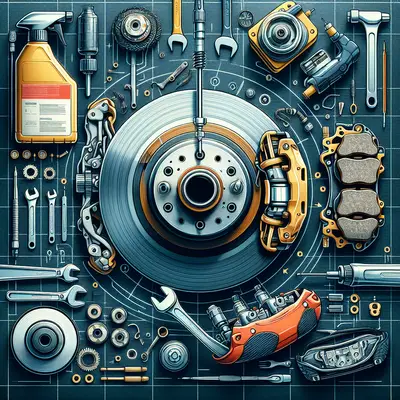
Even if you never turn a wrench, understanding how your brake system functions will help you evaluate repair quality. Modern disc brake systems typically include:
- Brake pedal and booster (often vacuum or electronic)
- Master cylinder and hydraulic lines
- Calipers and pistons
- Brake pads, rotors (or drums and shoes on some rear setups)
- Brake fluid and ABS/ESC modules
These components must work as an integrated hydraulic and mechanical system. A new set of pads on neglected, corroded calipers may technically “fix” a noise complaint, but it will not restore the sharp, linear response a safety‑conscious owner expects. Premium repairs respect this system‑level view: they identify the root cause of poor braking rather than simply refreshing the most visible parts.
Exclusive Insight #1: Your Brake Fluid Is Quietly Dictating Pedal Feel
Most owners never see their brake fluid, yet it has an outsized influence on how the pedal feels and how consistently the system performs under stress. Brake fluid is hygroscopic—it absorbs moisture from the air over time. As water content increases, boiling point decreases, which can lead to a spongy pedal and reduced braking effectiveness, especially during repeated hard stops or when descending long grades.
A refined brake service does more than “top off” fluid. It includes:
- Measuring brake fluid moisture content or boiling point
- Flushing and replacing fluid at intervals consistent with the manufacturer’s schedule (often 2–3 years)
- Using the exact DOT specification recommended by the vehicle maker
For safety‑focused owners, asking for documented fluid test results before and after the service demonstrates that your brakes are not only mechanically refreshed but also hydraulically renewed.
Exclusive Insight #2: Rotor Finish and Runout Are as Important as Pad Quality
Many repair orders simply list “resurface rotors” or “replace rotors” without discussing the precision of the work. Yet rotor surface finish and runout (wobble) have a direct effect on pedal smoothness, stopping distance, and long‑term noise behavior.
An elevated approach to rotors includes:
- Measuring rotor thickness and lateral runout with proper gauges
- Confirming that resurfacing will keep rotors above the minimum thickness stamped on the hat
- Ensuring the final surface finish is within specification to allow proper pad bedding
- Cleaning hub surfaces meticulously before rotor installation to prevent induced runout from rust or debris
The result is less brake pulsation, more consistent contact between pad and rotor, and a brake pedal that remains composed at highway speeds. When evaluating a shop, ask not only if they machine or replace rotors, but how they measure and verify the precision of their work.
Exclusive Insight #3: Pad Compound Should Reflect Your Driving, Not Just Your Budget
“Ceramic vs. semi‑metallic” is often oversimplified into a cost decision, but the true question is: what friction characteristics best match your driving, your vehicle’s weight, and your expectations for refinement?
Key considerations for a premium choice:
- Friction stability: Quality pads maintain consistent performance across temperature ranges, avoiding sudden “bite” changes.
- Noise design: Chamfers, slots, and shims tuned to your vehicle’s caliper geometry reduce squeal and vibration.
- Dust behavior: Some compounds create finer, lighter‑colored dust that is less visible on premium wheels.
- Fade resistance: Heavier vehicles, towing, or frequent mountain driving demand higher‑temperature stability.
An informed owner is justified in requesting pads that meet or exceed original equipment (OE) friction specifications, not generic “fits many” parts. The goal is not only to stop but to stop predictably, quietly, and repeatedly under the conditions you actually drive.
Exclusive Insight #4: Calipers and Hardware Decide Whether the Repair Lasts
A common shortcut in brake service is to reuse aging hardware and marginal calipers, assuming “if it moves, it’s fine.” For a sophisticated standard of safety, this is not sufficient. Calipers and their supporting hardware determine how evenly and reliably brake force is applied.
Premium‑grade attention includes:
- Inspecting caliper slide pins for free movement and proper lubrication with high‑temperature synthetic grease
- Replacing fatigued or rusted pad clips, springs, and anti‑rattle shims rather than cleaning and reusing them
- Examining dust boots and piston seals for integrity and signs of fluid leakage
- Comparing inner and outer pad wear; significant differences indicate caliper issues that must be corrected, not ignored
This level of scrutiny reduces the risk of uneven braking, premature pad wear, and the subtle pulling or dragging that can go unnoticed until it becomes severe. It is the difference between a brake job that merely feels new and one that remains stable and balanced over tens of thousands of miles.
Exclusive Insight #5: Road Testing Is a Critical, Often Overlooked Safety Stage
Many customers receive their vehicle after a quick loop around the block. For a refined standard of care, brake repair is not complete until the system is validated under realistic conditions. A purposeful road test serves two roles: quality assurance and controlled bedding‑in of new components.
A sophisticated final verification includes:
- Multiple stops from various speeds to confirm consistent pedal feel
- Straight‑line braking checks to detect pull, noise, or vibration
- Gentle but firm stops to begin the pad/rotor mating process according to manufacturer guidance
- Post‑test inspection for any fresh leaks, abnormal heat, or hardware issues
For owners concerned with safety, it is entirely appropriate to ask how the shop road‑tests vehicles after brake work and whether any measurements (such as pedal travel or ABS activation behavior) are documented. This step transforms “installed parts” into a properly proven braking system.
How to Evaluate a Brake Shop with a Premium Mindset
Most service centers advertise brake specials; fewer can articulate their philosophy about safety‑critical repairs. As a discerning owner, you can separate the two by asking focused, practical questions:
- Do you measure rotor runout and thickness, or only replace by appearance?
- How do you handle brake fluid—do you flush, and how do you determine the interval?
- What pad brands or friction standards do you use, and are they OE‑equivalent or better?
- Do you replace hardware and lubricate slide pins as part of every brake service?
- What does your road test look like after a complete brake job?
The answers will quickly reveal whether the shop is selling a commodity brake job or delivering a carefully engineered service. Your goal is not to interrogate, but to collaborate with a technician who respects the same standard of precision and safety you do.
Conclusion
Exceptionally maintained brakes are rarely dramatic; they work in quiet, predictable harmony every time you need them. By understanding the finer points of brake fluid condition, rotor precision, pad selection, caliper integrity, and thorough road testing, you elevate brake repair from a line item on a bill to a carefully managed safety practice.
This refined approach does more than protect your vehicle—it protects your time, your passengers, and the calm assurance you feel every time you press the pedal and the car responds exactly as it should. On today’s crowded roads, that level of confidence is not a luxury. It is the new standard for drivers who expect excellence at every stop.
Sources
- National Highway Traffic Safety Administration (NHTSA) – Brakes and Safety Systems – Federal guidance on brake safety, system components, and performance expectations
- U.S. Department of Transportation – Brake Fluid Information – Technical background on brake fluid specifications, hygroscopic behavior, and maintenance considerations
- Penn State University – Brake System Fundamentals – Educational overview of how modern hydraulic brake systems function and why proper service matters
- AAA – How to Choose Quality Auto Repair – Practical advice on evaluating repair shops and ensuring high‑quality service for safety‑critical systems
- Brembo – Brake Disc and Pad Technical Insights – Manufacturer‑level detail on rotor finish, pad compounds, and performance characteristics
Key Takeaway
The most important thing to remember from this article is that this information can change how you think about Repair Guides.