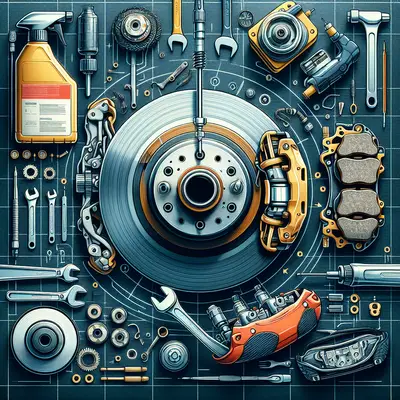
For the driver who cares as much about composure as speed, brake repair is not a last‑minute emergency—it’s a discipline. This guide is designed for those who value precision, predictability, and quiet authority at every stop. Rather than drowning you in jargon, it translates expert‑level brake knowledge into a clear, ordered blueprint you can use to speak fluently with any technician—and recognize when your brakes are no longer performing to your standard.
Reading the Pedal: Subtle Feedback Before Obvious Failure
Most drivers wait for squeals and grinding before acting; attentive owners notice far earlier signals. The brake pedal is your first, best sensor. A firm, consistent pedal that responds the same way every time suggests a healthy hydraulic system and properly bedded pads. A pedal that slowly sinks under steady pressure hints at internal leakage or a failing master cylinder, even if the car still appears to stop adequately. A slightly “mushy” or elastic feel can signal air in the lines, moisture‑contaminated brake fluid, or rubber hoses that are beginning to swell. Pulsation in the pedal, even very light at higher speeds, may indicate rotor thickness variation or uneven pad deposits—problems that erode confidence long before they reach a “dangerous” threshold. By learning the normal texture, travel, and response of your specific pedal, you can treat any deviation as an early warning, not a late‑stage problem.
Beyond Pad Thickness: Evaluating Brakes Like a Professional
Pad thickness is the spec most people know, yet discreet brake issues often hide in less obvious details. A refined evaluation looks at the full assembly: pads, rotors, hardware, and fluid. Pad wear should be even on both inner and outer surfaces; heavier inner pad wear may point to sticking caliper slide pins or seized caliper guide hardware. Rotor surfaces should appear smooth and uniform; visible streaks, deep grooves, or blue discoloration point to overheating or metal‑to‑metal contact. The pad’s friction material should be intact with no chipping or glazing; a shiny, glass‑like surface indicates overheating or improper bedding, which can extend stopping distances. Even the color and smell of brake fluid are telling—dark, murky, or burnt‑smelling fluid can betray moisture, oxidation, or previous overheating events. When you visit a shop, ask to see your removed components; the visual story they tell is often more honest than any invoice description.
The Five Exclusive Insights Discerning Owners Rarely Hear
These five insights sit slightly above the standard advice, yet they profoundly influence both safety and driving refinement:
Brake Fluid Age Matters More Than Mileage
Brake fluid absorbs moisture over time, not just use. Even a low‑mileage vehicle that mostly sits can have degraded fluid after two to three years. Moisture lowers the boiling point, increasing the risk of fade during repeated stops or steep descents, and it quietly promotes internal corrosion in calipers, ABS components, and lines.
Caliper Hardware Is Not an Afterthought
Many budget repairs reuse old hardware (clips, shims, slide pins). For a quiet, precise brake feel, fresh high‑quality hardware is almost as important as the pads themselves. Sticky or corroded hardware can cause uneven wear, pulling, and post‑service noises that sophisticated drivers find unacceptable.
Pad Compound Should Match Your Driving Style, Not Just Your Car
“Premium” pads are not all identical. Some are tuned for low dust and silence; others favor high‑temperature performance; a few aim to balance both. A city commuter, mountain‑road enthusiast, and highway tourer can all be driving the same model car yet benefit from very different pad formulations.
Rotor Surface Prep and Bedding Decide How Long Repairs Stay Quiet
Simply bolting on new pads and rotors isn’t enough. Proper rotor cleaning (removing protective coatings thoroughly), correct torque of lug nuts, and a controlled bedding procedure are what create an even transfer layer of pad material. This subtle step dramatically reduces future pulsation, judder, and squeal.
ABS and Stability Systems Hide Brake Weakness—Until They Don’t
Modern ABS and stability control can compensate for some inconsistencies in braking, masking minor issues until they compound. If your ABS activates frequently in normal dry conditions, it can be a clue that underlying brake performance or tire grip is below par, not just that “the system works.”
Spec Sheets with Style: Choosing Parts Worthy of Your Standards
If you expect consistent, poised stopping, the parts you choose must meet that expectation. Factory‑equivalent (OEM) components are often engineered as a balanced system—pedal feel, noise, fade resistance, and dust all tuned together. However, discerning owners may choose carefully selected aftermarket parts to refine that balance further. Look for pads with clearly published friction ratings (SAE J866 “FF,” “GG,” etc.), and note that the rating alone doesn’t define quality, but it does reveal heat‑range intent. For everyday driving with a premium feel, avoid race‑only compounds; they can be noisy, dusty, and underperform when cold. When selecting rotors, prioritize precision machining, proper ventilation design, and anti‑corrosion coatings on non‑friction surfaces over flashy cross‑drilling that adds little benefit for street use. Finally, confirm compatibility with your vehicle’s electronic systems—especially parking brake actuators integrated into rear calipers—so that advanced features work seamlessly after the repair.
The Quiet Science of Installation: What to Expect from a Meticulous Shop
Even top‑tier components can underperform if installed carelessly. A meticulous brake service begins with a thorough inspection and documentation of existing wear patterns. Caliper slide pins should be removed, cleaned, and lubricated with high‑temperature, brake‑specific grease—never general‑purpose lubricants that can swell rubber components. Contact points between pad backing plates and brackets are cleaned and treated with a thin, precise layer of high‑temp anti‑squeal compound. The hub surface is cleaned to bare metal to ensure the rotor sits perfectly flush; even slight rust ridges can create lateral runout, leading to vibration. Lug nuts are torqued in a star pattern with a calibrated torque wrench, not an impact gun alone, preserving rotor true‑ness and wheel security. Once assembled, a brief road test with progressive, controlled stops confirms that the system beds in cleanly and that the vehicle tracks straight under braking.
Elevating Your Brake Service Conversations
Owners who demand premium results benefit from speaking to technicians in specific, outcome‑oriented language. Rather than asking for “new brakes,” you might request: “A full brake inspection with measured rotor thickness, runout check, caliper slide condition, fluid test, and a pad compound suited to quiet, confident daily driving.” Ask how the shop handles bedding‑in procedures and whether they torque wheels to specification. Inquire about brake fluid test methods—do they use boiling‑point testers or simple visual inspection? When you collect your vehicle, ask to see the old pads and rotors, and have the technician point out any heat spots, uneven wear, or contamination that informed their recommendations. This is not being difficult; it’s setting a standard. Over time, shops learn that you value not only safety, but also refinement—and they will rise to match that expectation.
Conclusion
Brake repair, handled thoughtfully, is far more than replacing worn components. It is an exercise in engineering respect: for the forces involved, for the systems beneath your feet, and for the calm confidence you expect in every deceleration. By learning to read early warning signs, insisting on precise component choices, and partnering with technicians who value detail as much as you do, you transform brake service from a reactive chore into a quietly powerful advantage. On a busy highway, a wet city street, or a steep mountain descent, that advantage feels like what it truly is: engineered peace of mind.
Sources
- National Highway Traffic Safety Administration (NHTSA) – Brake Safety Information - U.S. government guidance on brake systems, performance, and safety considerations
- Federal Motor Carrier Safety Administration – Brake Systems - Technical and regulatory insights into brake function, inspection, and maintenance best practices
- Continental – Understanding Brake Fluid and Its Importance - Detailed explanation of brake fluid properties, aging, and safety implications
- Raybestos – Brake Pad Friction Ratings Explained (SAE J866) - Authoritative overview of friction codes and what they mean for pad performance
- AAA – Brake System Service and Repair Guide - Consumer‑focused, technically sound guidance on brake inspection, repair, and maintenance intervals
Key Takeaway
The most important thing to remember from this article is that this information can change how you think about Repair Guides.