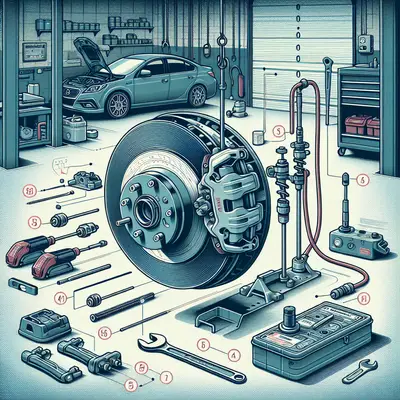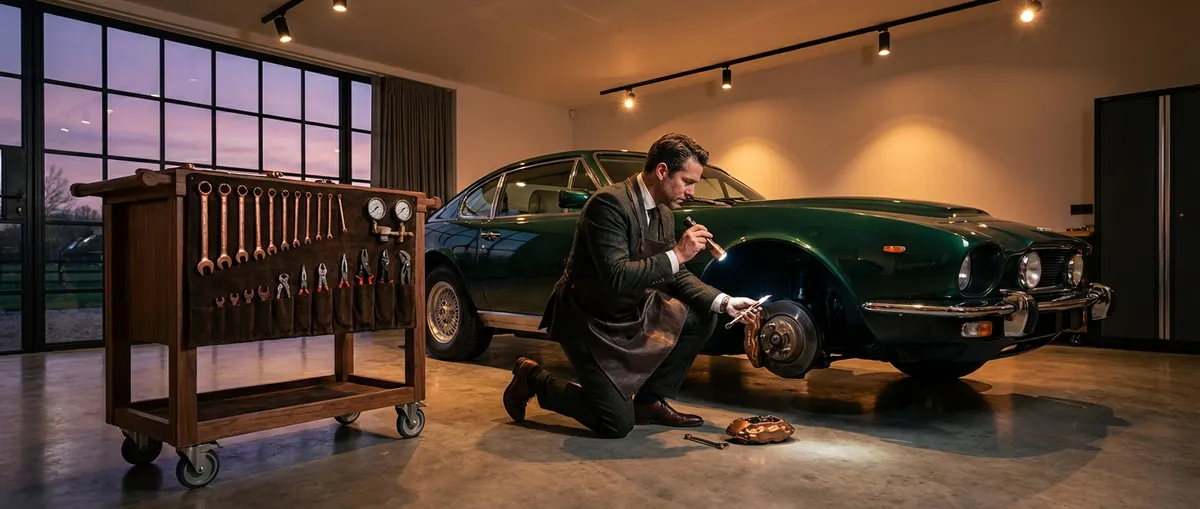
Brake maintenance is often treated as a line item on a service invoice—necessary, but unremarkable. Discerning owners know better. The way a vehicle comes to a stop reveals more about its engineering, its care, and its driver than almost any other dynamic. This guide explores a more refined approach: not just keeping brakes “within spec,” but cultivating a level of stopping confidence that feels deliberate, composed, and repeatable in every condition.
The Signature of a Healthy Brake System
Every well‑kept brake system has a distinct “signature”—the blend of pedal feel, noise, and stopping behavior that tells you, quietly but unmistakably, that things are in order.
When maintenance is approached with intention, the pedal’s initial bite becomes predictable, the transition from light to firm braking remains linear, and body motion under deceleration is controlled rather than abrupt. There is no sudden change in pedal travel from one week to the next, no intermittent pull to one side, no faint vibration that disappears as soon as the road smooths out.
Treat this signature as something you learn and protect. After a thorough brake service, pay attention over the next few days to how the system feels under gentle urban stops, hard highway braking, downhill descents, and in the wet. That baseline is your personal reference. Months later, even minor deviations—a softer pedal after an overnight park, a slightly longer stopping distance with the same familiar pressure—can alert you to developing issues long before a warning light or grinding noise appears. Owners who drive with this level of awareness often address concerns when repairs are small and manageable rather than urgent and expensive.
Beyond Pad Thickness: Interpreting Subtle Brake Wear
Most discussions of brake wear stop at pad thickness and rotor condition. For an owner who values precision, that is only the beginning. The pattern of wear tells a nuanced story about the system’s health and the vehicle’s driving environment.
Uneven pad wear between inner and outer pads can signal sticking slide pins, a dragging caliper, or rust buildup on hardware—issues that may not yet be audible but already compromise efficiency and fuel economy. Tapered pads, where one end is noticeably thinner, can indicate misalignment or seized hardware that distorts how the pad meets the rotor. Rotor surfaces with distinct ridges or a mirror‑like glaze hint at aggressive braking habits, prolonged heavy loads, or improper bedding of new pads.
An attentive owner, working with a trusted technician, can review these wear patterns at each service interval, not simply asking “How many millimeters are left?” but “What does this wear tell us about how the system is behaving?” This mindset transforms routine inspections into a form of diagnostics—one that prevents recurrence, not merely reacts to it.
Exclusive Insight #1: Use Wear Patterns as a Driving Feedback Loop
Ask your shop to photograph pads and rotors at each major service. Over time, you’ll see how your driving style translates into physical wear. If you notice frequent glazing or heat spots, it may be time to smooth out those last‑second hard stops or discuss a different pad compound more suited to your driving conditions.
Brake Fluid as a Precision Component, Not an Afterthought
Brake fluid is often described simply as “due every two years,” but its role is far more critical in a premium, confidence‑focused maintenance philosophy. It is the invisible link between your foot and the calipers, transmitting pressure with exactness—until moisture, heat, and age begin to erode that precision.
Brake fluid is hygroscopic: it naturally absorbs water vapor from the air. Over time, this lowers its boiling point and can introduce internal corrosion in lines, ABS components, and calipers. While many manufacturers now publish conservative service intervals, real‑world conditions—stop‑and‑go traffic, mountain driving, towing, and spirited driving—can justify a more proactive schedule.
A meticulous approach treats brake fluid as a performance asset rather than a commodity. Using fluid that meets or exceeds the OEM specification, replacing it before pedal feel becomes spongy, and ensuring that ABS bleeding procedures are properly followed are all hallmarks of an elevated maintenance strategy. The result is not only safety, but a firmer, more consistent pedal that feels the same in city traffic as it does after repeated high‑speed stops.
Exclusive Insight #2: Consider Periodic Boiling Point Testing
Many professional shops and some enthusiast garages now have brake fluid testers that estimate moisture content and boiling point. Instead of relying solely on time or mileage, ask to have your fluid tested. If the wet boiling point begins to dip significantly below specification—even before the calendar says “due”—you’ll know it’s time to refresh. This targeted approach protects both performance and expensive ABS hardware.
The Quiet Role of Cleanliness in Exceptional Brake Performance
On a refined vehicle, cleanliness is not just aesthetic—it is functional. Brake systems live in an environment of road film, brake dust, moisture, and, in many regions, corrosive road salts. Left unaddressed, this contamination gradually undermines the precision fitting and sliding that reliable braking depends upon.
Caliper slide pins, pad abutment surfaces, and rotor hats are all particularly vulnerable to subtle corrosion that builds from the outside in. Eventually, pads may drag slightly even when released, or bind momentarily as they engage, creating inconsistent pedal feel, uneven wear, and in severe cases, overheating of one corner of the vehicle.
Attentive maintenance means insisting that every brake service includes proper cleaning and lubrication—not just pad replacement. Hardware should be carefully inspected, replaced where necessary with high‑quality components, and lubricated with appropriate high‑temperature products. This is not a place for generic grease, rushed blow‑offs, or “good enough” shortcuts.
Exclusive Insight #3: Schedule a Post‑Winter Brake Decontamination
In climates with road salt or de‑icing chemicals, consider a dedicated brake decontamination once the season ends. Having the wheels removed to inspect, clean, and, where appropriate, re‑lubricate hardware can dramatically extend the life of pads, rotors, and calipers. This focused, seasonal attention often costs less than repairing seized calipers and heavily corroded rotors later.
Tire and Suspension: The Often‑Ignored Partners in Safe Braking
Brake pads and rotors get the headlines, but the system that actually brings you to a halt extends far beyond the calipers. The tire contact patch and the suspension that keeps it planted are as critical to braking performance as the friction materials themselves.
Worn or low‑quality tires will dramatically increase stopping distances, even on a freshly serviced brake system. Uneven tire wear patterns—cupping, feathering, or shoulders worn more than centers—can point to misalignment or suspension wear that compromises stability under braking. Soft shocks or struts can allow excessive forward weight transfer, overloading front tires and underutilizing rear braking potential, especially during emergency stops.
A premium brake maintenance mindset always pairs brake inspection with tire and suspension evaluation. It is the harmony of these systems that creates the reassuring, drama‑free deceleration that careful drivers expect, particularly in adverse weather or sudden stops.
Exclusive Insight #4: Align Brake Service with Tire Rotations and Inspections
Whenever possible, synchronize major brake evaluations with tire rotations or replacements. With the wheels already off, technicians can assess pad wear, rotor health, tire condition, and visible suspension components in one integrated inspection. This holistic view often uncovers developing issues—like worn control arm bushings or shocks—that might otherwise be missed until they noticeably affect braking stability.
Driving Technique as a Daily Maintenance Practice
The most elegant brake maintenance strategy continues long after the service bay door closes. The way you drive each day has a profound effect on brake longevity, consistency, and reliability—far beyond simply “driving gently.”
Smooth, anticipatory braking that uses engine deceleration and early pedal application is not just polite to passengers; it keeps temperatures moderate and allows pads to interact with rotors in a controlled, uniform way. Avoiding repeated hard stops from high speed when the system is cold, and allowing for gentle braking after a spirited run instead of parking immediately with glowing hot components, both help prevent uneven rotor deposits and thermal stress.
In stop‑and‑go traffic, maintaining a slightly larger following distance reduces the frequency and severity of braking events. Over the life of the vehicle, this can significantly reduce pad and rotor wear, as well as the heat cycling that gradually ages brake fluid and seals.
Exclusive Insight #5: Use “Temperature Awareness” as a Daily Habit
Begin to think about brake temperature the way you might consider engine temperature or tire grip. After a fast descent, highway exit, or spirited drive, give the brakes a few blocks of gentle use before parking. This allows them to cool more evenly and mitigates the risk of residual pad imprinting on hot rotors—a subtle phenomenon that can lead to future vibration and uneven braking sensations.
Conclusion
Premium brake maintenance is not defined by how often you replace parts, but by how deliberately you care for an integrated system: fluid, hardware, friction materials, tires, suspension, and even driving technique. By learning your vehicle’s unique braking signature, reading wear patterns as diagnostic clues, treating fluid and cleanliness as performance priorities, viewing tires and suspension as true partners, and adopting temperature‑aware driving habits, you cultivate more than safety. You create a driving experience in which every stop feels as thoughtfully composed as the car itself.
This is brake confidence, curated—not by chance, but by design.
Sources
- [National Highway Traffic Safety Administration (NHTSA) – Brake Safety Information](https://www.nhtsa.gov/equipment/brakes) - Federal guidance on brake systems, safety considerations, and maintenance awareness
- [U.S. Department of Transportation – Brake System Safety](https://www.transportation.gov/mission/safety/brake-systems) - Overview of brake systems and their role in overall vehicle safety
- [AAA – How to Know When You Need New Brakes](https://exchange.aaa.com/automotive/automotive-repair/know-need-new-brakes/) - Practical advice on recognizing brake wear and warning signs
- [University of Texas at Austin – Brake Fluid Properties (ME Technical Note)](https://www.me.utexas.edu/~me356/lectures/brake_fluid.pdf) - Technical discussion of brake fluid characteristics and performance implications
- [Tire Rack – How Tires Affect Braking Distance](https://www.tirerack.com/learn/tires/braking-distance) - Detailed explanation of the relationship between tires and braking performance
Key Takeaway
The most important thing to remember from this article is that this information can change how you think about Maintenance.