For drivers who value refinement behind the wheel, true confidence does not come from horsepower or trim packages—it comes from the certainty that, if required, the car will shed speed with calm precision. Brake safety is not merely a technical concern; it is a discipline. The following insights are designed for owners who demand more than “good enough” from their braking system and who view every stop as a quiet demonstration of control, care, and foresight.
Reading the Car’s “Braking Signature”
Every vehicle develops a distinct braking “signature”—a combination of pedal feel, sound, and vehicle response that, once familiar, becomes an early-warning system for nuanced changes.
Spend several drives deliberately observing how your brakes behave in predictable situations: gentle suburban stops, controlled highway deceleration, and short bursts of firm braking from moderate speeds. Pay attention to pedal travel, the moment when initial bite transitions to deeper braking force, and how the car’s weight shifts forward. Once you know this signature, even minor deviations become noticeable: a softer initial bite, a slightly longer stopping distance, or a faint vibration that was not there before. These delicate shifts are often the first indicators of pad glazing, rotor irregularities, or accumulating moisture in the brake fluid—issues that are simplest and safest to address in their earliest stages. In this way, a refined driver moves from reacting to obvious problems to anticipating subtle ones.
Curating Your Braking Temperatures, Not Just Your Speed
Most drivers think about speed; few think about temperature. Yet brake performance is governed as much by heat management as by how hard you press the pedal.
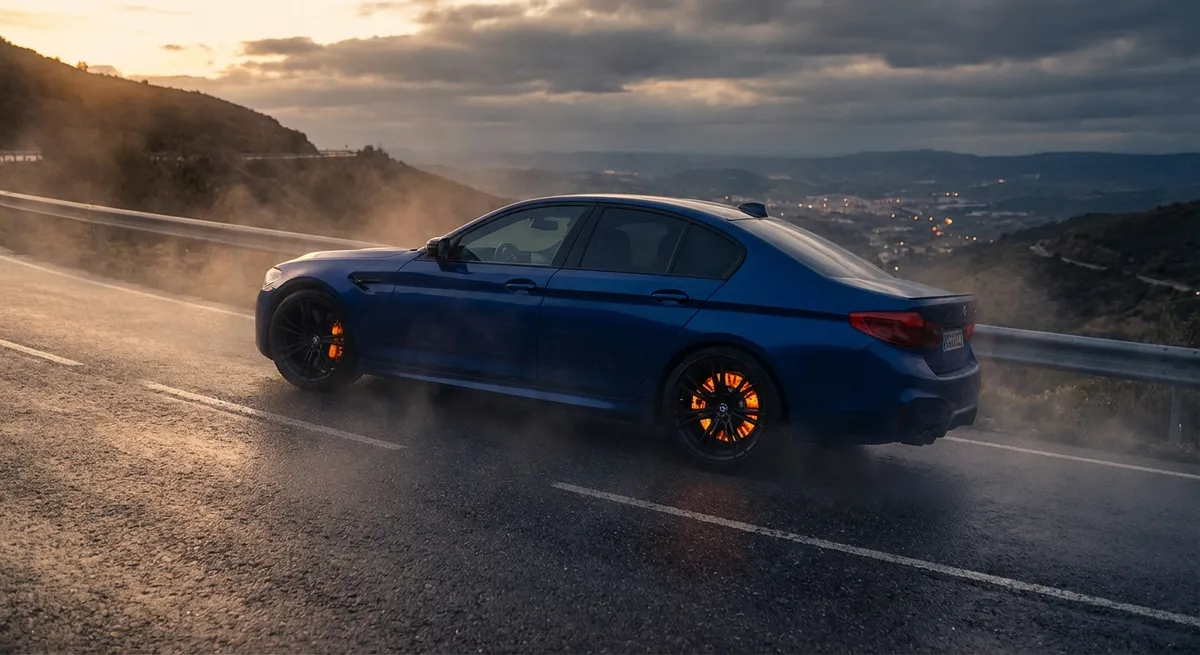
Under spirited driving, hilly terrain, or heavy urban stop‑and‑go, brakes can build heat faster than they can shed it. You don’t need a track to overheat a system—prolonged downhill braking or towing can be enough. Cultivate the habit of alternating between firm, decisive braking and true coasting instead of riding the pedal lightly for long periods. Where safe, downshift in vehicles with manual or well‑calibrated automatic transmissions to use engine braking as a complement, not a replacement, for the brake system. By avoiding chronic light pressure, you reduce the risk of pad glazing, brake fade, and rotor warping. This approach extends component life, but just as importantly, it preserves consistency: brakes that feel the same at the end of a demanding journey as they did at the beginning.
The Art of the “Reference Stop” in Your Own Environment
Professional drivers routinely perform reference stops—controlled, repeatable braking tests—to evaluate systems. A refined car owner can adapt this idea in a subtle, low‑key manner.
Identify a familiar stretch of road where the speed limit and traffic conditions safely allow for a calm, straight‑line stop from a moderate speed (for instance, from 30–35 mph to a complete halt). Use this spot periodically—perhaps monthly—as your private benchmark. Perform one composed, progressive stop and observe how the car behaves: steering wheel stability, pedal firmness, any hint of pulling to one side, and the time it takes to come to rest. Because the environment is consistent, even marginal changes become noticeable over time. If the steering wheel begins to quiver, you might be encountering early rotor irregularities. If the car drifts subtly left or right, a caliper, hose, or tire issue may be emerging. By institutionalizing this discreet ritual, you transform subjective impressions into a reliable, repeatable safety check.
Elevating Brake Fluid from Afterthought to Priority
Brake pads and rotors naturally command attention because they are visible and tangible. Brake fluid, by contrast, is often ignored precisely because it is out of sight. Yet its condition is foundational to every confident stop.
Brake fluid is hygroscopic—it absorbs moisture over time. This moisture lowers the fluid’s boiling point and quietly invites corrosion into expensive components like calipers, ABS modules, and master cylinders. A refined maintenance philosophy treats fluid as a performance medium, not just a commodity. Rather than waiting for a vague “flush sometime” suggestion, commit to an interval aligned with the vehicle manufacturer’s recommendations or, in demanding climates and driving conditions, slightly more conservative. If you live in a coastal, humid, or mountainous environment—or drive frequently in stop‑and‑go congestion—moisture absorption can be accelerated. Request a brake fluid boiling point test or moisture content assessment during service visits when possible; it’s a discreet but revealing indicator of the system’s resilience under hard stops. Prioritizing fluid health delivers more consistent pedal feel, sharper response, and a longer service life for the entire braking architecture.
Designing Your Drives to Be Brake‑Friendly
Truly meticulous brake care begins before the pedal is ever pressed. It starts with how you design your drives—your route choices, your pacing, and your approach to traffic patterns.
Where options exist, favor routes with smoother flow over those with frequent, abrupt stops—this often means leaving a few minutes earlier and choosing slightly less congested corridors. Maintain generous following distances not only for collision avoidance, but to give yourself the luxury of lifting off the throttle early instead of resorting to sudden braking. Use traffic lights ahead as cues: if a light has been green for a long time, assume it may change and prepare by easing off gently. In wet conditions, snow, or sanded winter roads, plan even further ahead; surface contaminants significantly alter friction, making gentle, progressive braking far safer than late, assertive stops. The result is a driving style that looks unhurried from the outside yet is highly intentional—protecting both your brakes and everyone sharing the road with you.
Conclusion
Brake safety at a premium level is not about reacting to squeals and warning lights; it is about cultivating an attentive, almost conversational relationship with your car’s most important safety system. By learning your vehicle’s braking signature, managing heat with intention, practicing reference stops, elevating brake fluid care, and designing brake‑friendly drives, you assemble a quiet but formidable layer of protection. The payoff is not simply fewer repair bills, but a deeper, more composed confidence every time you ask the car to go from motion to stillness—with precision, grace, and complete assurance.
Sources
- [National Highway Traffic Safety Administration (NHTSA) – Brakes](https://www.nhtsa.gov/equipment/brakes) - Federal guidance on brake safety, performance, and defect investigations
- [AAA – Brake System: Common Problems and Maintenance](https://exchange.aaa.com/automotive/automotive-repair-maintenance/brake-system/) - Overview of brake components, symptoms, and recommended maintenance practices
- [Car and Driver – Brake Fade Explained](https://www.caranddriver.com/features/a15130570/tech-101-brake-fade-explained/) - Technical explanation of heat, brake fade, and how driving style influences brake performance
- [U.S. Department of Energy – Energy Efficient Driving](https://afdc.energy.gov/conserve/behavior_techniques.html) - Describes driving behaviors (like smooth deceleration) that reduce wear and improve safety and efficiency
- [University of Texas at Austin – Brake Fluid Tutorial (ME Dept.)](https://www.me.utexas.edu/~me356L/Brake_Fluid_Tutorial.pdf) - Educational overview of brake fluid properties, moisture absorption, and boiling point considerations
Key Takeaway
The most important thing to remember from this article is that this information can change how you think about Safety Tips.