For the driver who values composure over drama, brake repairs are not a crisis event — they are a curated decision. The difference between a hurried, uncertain repair and a deliberate, confidence-inspiring one lies in what you understand before you hand over the keys. This guide is crafted for owners who expect quiet competence, precise stopping power, and a repair experience that respects both safety and standards. Rather than racing through generic “warning signs,” we’ll focus on the refined details that separate ordinary brake work from truly well-executed repairs.
Below are five exclusive, practice-ready insights that help you approach brake repairs with the same discerning eye you bring to every other important choice in your life.
Understanding “Brake Feel” as a Diagnostic Tool
Most drivers wait for noises, warning lights, or obvious problems. The attentive driver uses brake feel as an early-warning diagnostic instrument — long before a shop visit becomes urgent.
A properly functioning brake pedal should engage smoothly, build confidence progressively, and communicate consistency. If the pedal feel changes over days or weeks (firmer, softer, longer travel, slightly uneven response), that evolution itself is a meaningful signal. For example, a slowly softening pedal may suggest air or moisture in the brake lines or early fluid degradation, while a firmer, almost wooden feel can hint at glazing of pads or mismatched friction materials.
Treat your daily commute as an ongoing “baseline check.” Notice how your brakes respond:
- When cold versus fully warmed after a longer drive
- In gentle city braking versus controlled hard stops on a safe, straight road
- During a series of quick, consecutive stops (which can reveal early fade or inconsistency)
Documenting these impressions — even in simple notes on your phone — provides a powerful, refined conversation starter with a technician. Instead of saying, “My brakes feel off,” you can explain, “Pedal travel increased noticeably over the past two weeks, particularly during extended downhill braking.” That level of detail invites more accurate diagnosis and a more tailored repair solution.
Matching Brake Components to Your Driving, Not Just Your Vehicle
Many brake jobs are done to the vehicle’s basic specification. Discerning owners go one level deeper: they match components not just to the model, but to how the car is actually driven.
Several subtle but critical choices define the character and safety margin of your braking system:
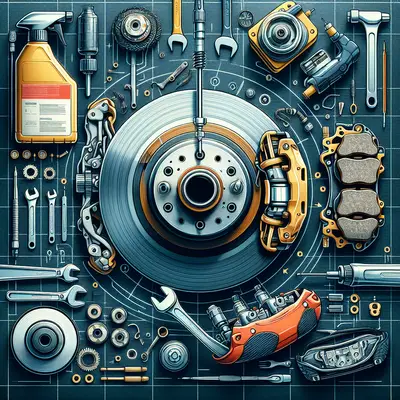
- Pad compound: OEM-style pads prioritize balance: low noise, reasonable dust, and stable braking. Performance-oriented compounds can withstand higher temperatures but sometimes trade low-speed refinement or noise. Touring-focused compounds can enhance smoothness and consistency in highway conditions.
- Rotor design: Plain rotors are often ideal for daily driving and quiet operation. Slotted or drilled rotors may be preferable in heavy-duty or high-heat usage, but they are not automatically “better” for every driver.
- Caliper condition and hardware: Premium brake work includes careful inspection (and, if needed, replacement) of caliper slide pins, bushings, and hardware. Neglecting these can compromise even the best pads and rotors.
For a driver who values predictability in all weather and traffic conditions, the right question is not “What’s cheapest?” but “What combination of pads, rotors, and hardware will keep this vehicle stable and confident in the way I use it most?” Your repair guide should empower you to ask your shop:
- What pad compound are you recommending, and why?
- Is the hardware kit included in this brake service?
- How will this choice affect braking feel, dust, and noise in my typical driving?
That level of specificity elevates the repair from a commodity to a considered safety decision.
Fluid and Heat: The Quiet Forces Behind Reliable Stops
Brake fluid and heat management rarely feature in casual brake conversations, yet they are crucial to refined, repeatable stopping. Modern braking systems rely on hydraulic fluid that must maintain integrity under high temperatures and pressure. Over time, brake fluid absorbs moisture from the air, lowering its boiling point and subtly diminishing performance — long before a dramatic failure.
A sophisticated approach to brake maintenance includes:
- Scheduled brake fluid replacement: Many manufacturers recommend fluid changes approximately every 2–3 years (or as specified in the owner’s manual), even if the vehicle is low mileage. This is not just “extra” service — it preserves braking consistency, especially during repeated hard stops or mountain driving.
- Awareness of brake fade: If repeated firm braking (descending a long hill, for example) leads to a slightly longer pedal travel or less bite, that is a critical sign. It may indicate overheated pads, rotors, or fluid edging toward its limits.
- Thermal balance: Proper torque on lug nuts, correct bedding-in procedures for new pads and rotors, and avoiding unnecessary hard braking for the first 200–300 miles after a repair all help establish even rotor surfaces and stable thermal behavior.
When you schedule brake work, include brake fluid in the conversation: “Are we testing the brake fluid condition? If it’s due, let’s add a proper flush to this service.” That single detail significantly raises the safety and performance ceiling of your entire brake system.
Verifying the Quality of a Brake Repair — Beyond the Invoice
A premium brake repair isn’t confirmed by a line item on an invoice; it is confirmed by how the vehicle behaves — and by evidence you can quietly verify.
Here are refined, practical ways to assess quality after any brake job:
- Visual check through the wheel: When safe and with the vehicle parked, look through the wheel spokes. You should see clean, uniform rotor surfaces without obvious deep grooves or rusty patches where the pad doesn’t contact.
- Initial road test protocol: After any brake service, perform a controlled evaluation on a quiet, straight road:
- Begin with very gentle stops from low speeds to confirm basic function.
- Progress to slightly firmer stops at moderate speeds, checking for pull to one side, vibration, or uneven feedback.
- Avoid full emergency stops until the pads and rotors have been gradually bedded-in per your shop’s or manufacturer’s recommendations.
- Pedal confidence: The pedal should feel consistent from one stop to the next. Any change in pedal height, sponginess, grinding, or abrupt noise warrants immediate re-inspection.
- Documentation: A meticulous repair facility will document what was replaced, any measurements taken (such as rotor thickness), and recommendations for future intervals.
Ask for old parts to be returned or at least visually shown to you. This is not about mistrust — it’s about education. Seeing worn pads or a heat-checked rotor once makes every future decision more informed and more precise.
Building a Personal Brake Safety Standard — Your Private Benchmark
Elite drivers and pilots rely on checklists and standards; discerning car owners can do the same, though in a quieter, more personal way. Instead of merely reacting to problems, you can establish a private brake safety standard tailored to your expectations.
Consider shaping your own standard around three elements:
Interval discipline
Commit to reviewing brake condition at defined triggers: - Every tire rotation or seasonal tire change - Prior to long trips or high-load driving (towing, mountain routes) - At brake fluid service intervals and during any suspension or tire work
Performance expectations
Define, in your own words, how your brakes should feel when healthy: - Pedal travel, effort, noise level, and stopping behavior in your usual environment - How the car behaves when braking in the rain, at highway speeds, and on long descents
Repair philosophy
Decide now — not during an urgent repair — where you stand on: - OEM vs premium aftermarket components - Proactive replacement (e.g., rotors with pads, hardware with pads) - Acceptable noise levels vs maximum performance or lifespan
By articulating your standards in advance, you transform brake service from a stress-laden surprise into a routine refinement of safety and experience. Each repair becomes an opportunity to maintain, and occasionally elevate, the quiet assurance you expect when you ask your vehicle for a decisive, stable stop.
Conclusion
Brake systems reward those who pay attention to nuance. The difference between “the brakes were changed” and “the brakes inspire confidence every time” lies in refined choices: how you read pedal feel, how components match your real driving, how fluid and heat are managed, how you verify work, and how you set your own standards.
Approach your next brake repair not as a transaction, but as an intentional calibration of safety and composure. With the right questions and a clear personal benchmark, every stop can feel less like a guess — and more like assurance, by design.
Sources
- National Highway Traffic Safety Administration (NHTSA) – Brakes and Safety Systems - Federal guidance on brake safety, performance expectations, and related vehicle systems
- U.S. Department of Transportation – Brake System Overview (FMVSS Reference) - Background on regulatory standards governing brake performance and testing
- Brembo – Technical Insights on Brake Components - Manufacturer explanations of pad compounds, rotor designs, and heat management
- Continental ATE – Brake Fluid and Hydraulic System Information - Detailed discussion of brake fluid aging, boiling points, and service intervals
- AAA – Automotive Brake System Basics - Consumer-focused overview of brake components, warning signs, and service considerations
Key Takeaway
The most important thing to remember from this article is that this information can change how you think about Repair Guides.