For drivers who treat the road as an extension of their standards—not merely a way to get from A to B—brake safety is non‑negotiable. It is the quiet craftsmanship beneath every composed stop, the unseen precision that separates a merely functional car from a truly confidence‑inspiring one. This guide is designed for owners who prefer clarity over guesswork and discipline over deferred maintenance—offering a structured, premium‑minded approach to brake repair decisions at every stage.
Reframing Brake Repair as a Safety System, Not a Single Job
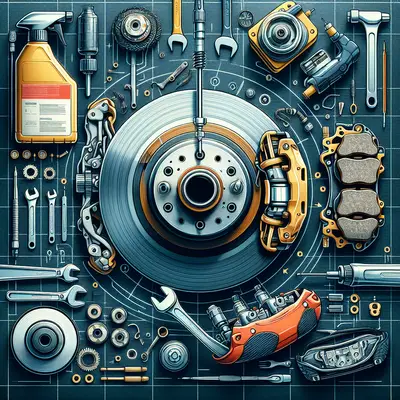
Many drivers still see “brake repair” as a simple pad swap, but the modern braking system is an integrated ecosystem of components working in deliberate harmony. Pads, rotors, calipers, brake lines, fluid, ABS modules, and even wheel speed sensors collectively shape every stop you make, from a gentle city slowdown to an emergency highway brake.
A refined approach starts by thinking in systems, not parts. When a service advisor mentions warped rotors or low pad thickness, the discerning owner asks how this fits into the overall condition of the system—caliper function, fluid age, line integrity, and ABS performance. A true repair, rather than a cosmetic fix, addresses root causes such as uneven pad deposits, sticking caliper pins, or degraded fluid leading to spongy pedal feel. When you view the brakes as a cohesive safety system, you’re less vulnerable to partial, piecemeal work that feels cheaper in the moment but costs control—and money—over time. The real objective is not just to restore braking, but to restore confidence.
Exclusive Insight #1: Pad Compound Is a Safety Choice, Not Just a Comfort Preference
Most service menus reduce pad options to “standard” or “premium,” but for a careful driver, the brake pad compound is a strategic decision. Different formulations—organic, semi‑metallic, and ceramic—each change how your car behaves when you ask for stopping power.
Ceramic pads often appeal to luxury‑oriented owners for their low dust and quiet operation, but they may have a slightly different bite profile when cold. Semi‑metallic pads usually offer stronger performance under high‑heat conditions, making them well‑suited for spirited or heavy‑load driving, but they can generate more noise and rotor wear. High‑quality organic pads tend to be gentle and quiet, yet may not tolerate repeated high‑energy stops as well.
The sophisticated way to choose is to match pad compound to how and where the car is genuinely driven: frequent mountain descents, urban stop‑and‑go, long‑distance highway touring, or spirited weekend drives. Discuss friction material options by name, not just “better vs. basic.” A well‑chosen pad compound gives you a predictable, linear pedal feel that quietly supports every decision you make behind the wheel.
Exclusive Insight #2: Rotor Finish and Installation Technique Define Pedal Elegance
To many owners, rotors are simply “new” or “old,” but the quality of the rotor surface and how it is installed can be the difference between a glass‑smooth stop and a subtle but persistent vibration that erodes confidence. Premium braking is about finesse, not just force.
First, insist on proper hub preparation. Any corrosion, debris, or unevenness on the hub face can introduce rotor runout, which eventually manifests as pedal pulsation—often misdiagnosed as “warped rotors.” Technicians should thoroughly clean the hub mating surface and measure runout against manufacturer limits. In some cases, a thin corrective shim may be used to bring runout into spec rather than simply stacking on new parts.
Second, pay attention to rotor design and finish. High‑quality rotors with precise machining and balanced castings offer more consistent braking and better resistance to heat‑related issues. Slotted or drilled designs can be beneficial in specific performance or high‑heat contexts, but on many street‑driven vehicles, a premium plain rotor is actually the most refined choice, prioritizing smoothness, longevity, and predictable friction behavior. The braking experience you feel underfoot is not an accident; it is the sum of these details.
Exclusive Insight #3: Brake Fluid Management Is the Hidden Signature of a Well‑Kept Car
Among all the fluids in a vehicle, brake fluid is the least glamorous—yet it may be the most underestimated. It is inherently hygroscopic, slowly absorbing moisture over time, which lowers its boiling point and can introduce internal corrosion into expensive components like ABS pumps and calipers.
A discerning owner doesn’t wait for a spongy pedal to appear. Instead, brake fluid is managed proactively, typically every 2–3 years or per the manufacturer’s strict interval, with attention to the DOT specification the vehicle was engineered for. In performance‑or high‑load environments—towing, mountain driving, or spirited use—fresh, high‑quality fluid is a quiet safeguard against brake fade when the system is pushed hardest.
Equally important is the bleeding method. A proper flush removes air pockets and old fluid from all corners of the hydraulic circuit, not just the calipers that are easiest to reach. For vehicles with advanced ABS or stability systems, a scan tool‑assisted bleed may be required to fully cycle fluid through internal valves and passages. This is the kind of detail that rarely makes the invoice, but decisively shapes brake feel—and long‑term reliability.
Exclusive Insight #4: Calipers and Hardware Are the Guardians of Even, Predictable Stops
Pads and rotors take center stage, but calipers and their hardware quietly determine whether every stop feels balanced, linear, and drama‑free. When these supporting components are neglected, even the best pads and rotors cannot perform to their potential.
Refined brake service pays particular attention to caliper slide pins, abutment clips, and anti‑rattle hardware. Slide pins should be cleaned and lubricated with the correct high‑temperature brake grease; hardened or torn pin boots invite contamination and eventual sticking. Abutment clips should be cleaned or replaced so pads can move freely without binding, which helps prevent uneven wear and hot spots on the rotor.
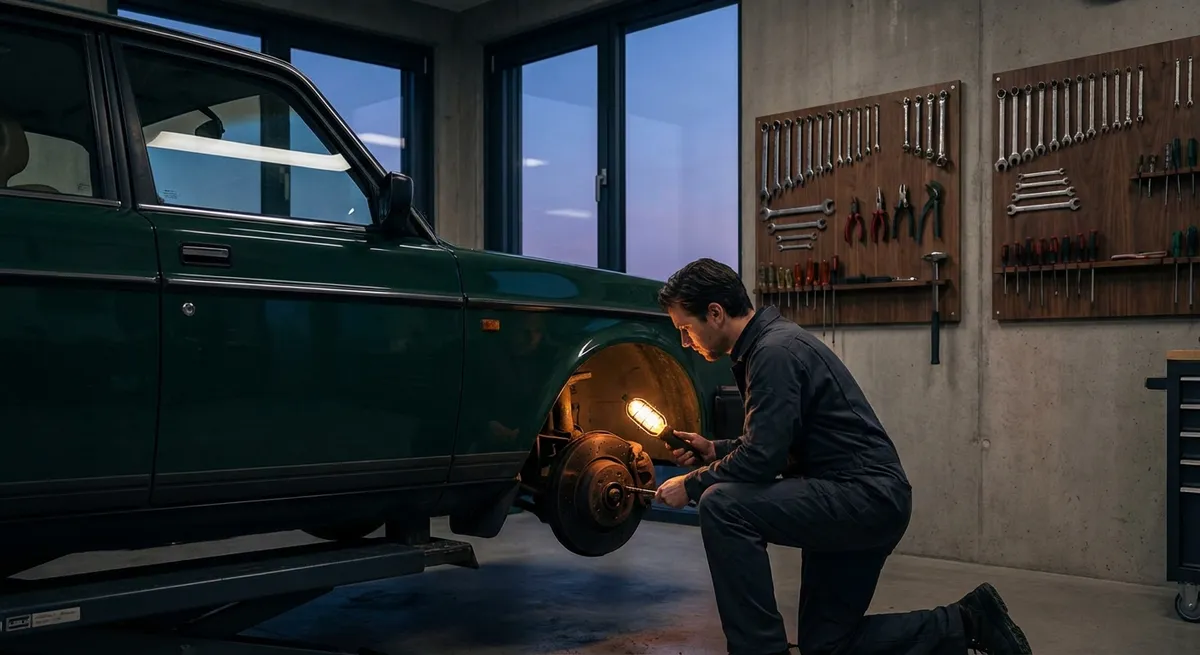
For aging vehicles, a proactive caliper inspection—checking for seeping seals, uneven pad imprint, or evidence of a dragging brake—can avert more costly issues. In climates with road salt, corrosion can cause caliper pistons or slides to seize slowly, creating subtle pull under braking that a sensitive driver may notice before any warning lights appear. Replacing or refurbishing calipers before catastrophic failure is not indulgent; it is an investment in stability and predictability when you need them most.
Exclusive Insight #5: Road Testing Is Not a Formality—It Is the Final Quality Control
An elevated brake repair does not end on the lift; it ends on the road. The post‑service test drive is where theory meets reality, and where an attentive driver or technician confirms that hardware, software, and human expectations are aligned.
A proper brake road test is deliberate, not hurried. It includes low‑speed stops to assess initial bite, moderate stops to feel for vibration or pull, and controlled higher‑speed decelerations (where safe) to evaluate stability and balance. ABS activation may be gently tested in a secure, low‑risk environment to confirm the system engages cleanly without erratic behavior or warning lights.
This is also the stage where bedding‑in procedures for new pads and rotors are initiated. Controlled repeated stops, allowing cooling intervals, help transfer an even layer of pad material onto the rotor face, setting the foundation for smooth, consistent performance. Owners who understand this process are more likely to respect the initial break‑in miles, avoiding aggressive braking or hard panic stops immediately after installation. The reward is a braking system that feels cohesive, composed, and entirely in character with a well‑maintained vehicle.
Applying a Refined Strategy to Your Next Brake Repair
A sophisticated brake repair approach is less about spending lavishly and more about spending wisely, with a clear priority on safety, predictability, and long‑term value. Before your next service, consider adopting a simple, elevated framework:
Ask for a system‑level evaluation rather than an isolated pad quote. Request measurements—pad thickness, rotor condition, fluid age, and caliper findings—so decisions are informed, not assumed. Discuss pad compounds and rotor options in terms of your actual driving environment. Confirm that brake fluid management and caliper hardware are included in the conversation, not treated as afterthoughts. And finally, ensure that a structured road test and proper bedding‑in are part of the shop’s standard practice, not a rushed final step.
For the discerning driver, confidence in the brake pedal is not a matter of luck. It is the product of informed choices, careful technique, and a quiet insistence on doing things the right way. When every stop feels composed, linear, and predictable, you know the system beneath you has been treated with the respect it deserves.
Conclusion
Brake repair, at its finest, is not just maintenance—it is an expression of how seriously you take your own safety and the safety of others. By looking beyond basic pad replacement and engaging with the subtleties of pad compound, rotor preparation, fluid management, caliper health, and rigorous road testing, you elevate every journey you take.
This refined perspective turns routine service into a form of craftsmanship. It rewards you with a braking system that responds precisely, quietly, and consistently, day after day. For those who expect more than “good enough” from their vehicles, that level of assurance is not just desirable—it is essential.
Sources
- National Highway Traffic Safety Administration (NHTSA) – Brake Safety & Maintenance - Federal guidance on brake system safety, design, and maintenance considerations
- U.S. Department of Transportation – Brake Fluids (FMVSS No. 116) - Official standards and technical information on brake fluid types and performance requirements
- AAA – Understanding Your Car’s Braking System - Consumer‑focused overview of modern brake components and how they work together
- Car and Driver – Brake Pads and Rotors Tech Guide - In‑depth explanation of pad compounds, rotor types, and how they influence performance
- SAE International – Brake System Fundamentals - Technical reference on braking principles, system design, and performance factors
Key Takeaway
The most important thing to remember from this article is that this information can change how you think about Repair Guides.