A well-engineered brake system is not merely a safety feature; it is the quiet guardian of every confident journey. For drivers who value refinement, composure, and control, understanding what happens beneath the surface of each stop transforms braking from a mundane necessity into an expression of mechanical poise. This perspective is not about learning to be a technician—it is about becoming a more informed, more discerning custodian of your vehicle’s most important safety system.
The Architecture of Confidence: How Modern Brake Systems Think
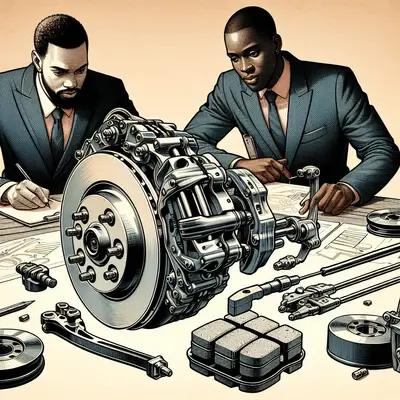
At its core, a modern brake system is a carefully orchestrated hydraulic network designed to translate gentle foot pressure into decisive stopping power. When you press the brake pedal, a master cylinder converts mechanical force into hydraulic pressure, sending brake fluid through lines and hoses to calipers (or wheel cylinders on some rear drum systems). These calipers clamp pads onto spinning rotors, converting kinetic energy into heat through friction.
Anti-lock braking systems (ABS), electronic brake-force distribution (EBD), and stability control are layered atop this foundation. ABS prevents wheel lockup by rapidly pulsing brake application at individual wheels, helping maintain steering control during hard braking. EBD subtly shifts brake force between front and rear axles, adapting to load and traction conditions. Stability control systems extend this logic further, applying braking at individual wheels to counter understeer or oversteer. The result is a system that does not simply “stop” the car; it manages the complex interplay of weight transfer, traction, and balance to maintain composure even under duress.
Exclusive Insight #1: Pedal Feel Is a Diagnostic Language
For the attentive driver, pedal feel is more than a comfort preference—it is a fluent language that reveals the health and integrity of the brake system.
A firm, consistent pedal that responds predictably is a sign of proper hydraulic pressure, minimal air in the lines, and healthy components. A pedal that feels spongy or “elastic” can indicate air in the brake fluid, moisture contamination, or deteriorating rubber hoses. A slowly sinking pedal under steady pressure may hint at an internal leak in the master cylinder, even if no external fluid is visible. A high, overly sensitive pedal can sometimes indicate uneven pad wear or improperly adjusted rear brakes.
Treat any change in pedal feel not as a minor annoyance, but as an early warning. Drivers who act promptly when the pedal’s character shifts—rather than waiting for a dash warning—often catch developing issues before they escalate into expensive or hazardous failures.
Exclusive Insight #2: Heat Management Is the Quiet Art Behind Every Safe Stop
Brakes are fundamentally heat-management devices. Their primary job is to convert the motion of the vehicle into thermal energy and then dissipate that heat safely. For refined driving, understanding how your driving style affects brake temperatures is essential.
Aggressive, repeated hard stops—especially on downhill grades or in spirited driving—can bring the system close to its thermal limits. When pads and fluid overheat, performance fades. This “brake fade” may feel like a lengthening stopping distance, a firmer pedal with reduced effectiveness, or in severe cases, a nearly unresponsive system with smoke or odor from the wheels. Even careful urban driving can create significant heat if the driver constantly rides the brakes or follows too closely, requiring frequent and abrupt stops.
The discerning driver allows the vehicle’s engine braking to assist on descents, maintains longer following distances to enable smoother deceleration, and avoids resting a foot lightly on the brake pedal. These habits keep brake temperatures lower, preserve pad material, and help ensure that the brakes have full capability reserved for those moments when they must perform at their best.
Exclusive Insight #3: Brake Fluid Is a Precision Medium, Not Just “Fluid”
Brake fluid is often overlooked, yet it is the lifeblood of hydraulic braking. It must maintain its properties under extremes of temperature and pressure, resist moisture absorption, and remain stable over time. When moisture infiltrates brake fluid—as it inevitably does through microscopic permeation and service intervals—it lowers the boiling point and corrodes internal components.
Under heavy braking, contaminated fluid can boil, forming compressible vapor pockets that produce spongy pedal feel and diminished stopping power. Even without obvious symptoms, old brake fluid quietly corroding internal passages and pistons undermines long-term safety and reliability. This is why premium maintenance practices treat brake fluid as a critical, time-sensitive component, not a “set-and-forget” consumable.
A refined approach adheres to the manufacturer’s recommended replacement interval or sooner if the driving environment is harsh (mountainous terrain, towing, or frequent heavy braking). For those who truly prioritize brake performance, periodic testing of brake fluid’s moisture content with a quality tester provides quantitative reassurance and elevates fluid replacement from guesswork to informed decision.
Exclusive Insight #4: Noise, Vibration, and Dust Are Signals—Not Just Inconveniences
Many drivers treat brake noise and dust as cosmetic issues, but attentive owners recognize them as meaningful signals. High-pitched squeals during gentle braking can point to wear indicators on brake pads (designed to make noise when pads reach a minimum thickness) or to pad/rotor surface conditions that deserve attention. Grinding noises, particularly under heavier braking, are more serious—often indicating that pads are worn past their friction material, allowing metal backing plates to contact the rotors directly.
Subtle vibrations in the pedal or steering wheel under braking can indicate rotor thickness variation or uneven pad deposits rather than “warped rotors” in the traditional sense. This can be caused by improper torqueing of lug nuts, severe overheating, or prolonged hard braking without adequate cooling. Visible dust on wheels also conveys information: heavier, darker dust may be associated with certain pad compounds and driving styles, while a sudden increase in dust on one wheel could hint at a caliper that is dragging or not releasing fully.
Rather than tolerating these symptoms or masking them with louder audio or frequent wheel cleaning, the safety-conscious driver treats them as prompts to investigate, understand, and address the underlying mechanical story.
Exclusive Insight #5: Matching Components to Your Driving Style Is a Safety Choice, Not a Luxury
Brake components are not all created with the same priorities. Pads, rotors, and even brake fluid are engineered with distinct trade-offs: some prioritize quiet operation and low dust, others focus on high-temperature resistance and fade resilience, and still others emphasize longevity or cost-effectiveness.
For a commuter in flat urban environments, a high-quality, original-equipment-equivalent pad and rotor combination may be ideal: quiet, predictable, and refined. For a driver who frequently encounters long downhill stretches, tows a trailer, or drives dynamically on winding roads, a more temperature-tolerant pad compound and vented or higher-mass rotors can be a prudent safety upgrade rather than a performance indulgence. Likewise, higher-spec brake fluids (with higher dry and wet boiling points) can offer an extra margin of safety for drivers who consistently operate near the system’s thermal limits.
The key is alignment. A sophisticated approach involves discussing your real-world driving patterns with a trusted technician and selecting components whose design envelope matches how you actually use the car. When component selection is treated as an informed safety decision rather than a purely economic one, the brake system evolves from generic to tailored—quietly tuned to your expectations and your environment.
Integrating These Insights Into Everyday Driving
For the driver who values composure and control, these five insights reshape how braking is perceived. The brake system becomes less of a mysterious black box and more of an intelligent, responsive partner. Attentiveness to pedal feel, heat, fluid condition, audible and tactile feedback, and component choice transforms routine maintenance into a refined discipline.
You need not become a mechanic to benefit. What matters is cultivating a mindset that treats small changes as clues, not inconveniences; that respects the brake system as a finely balanced architecture of heat, hydraulics, and friction; and that embraces proactive maintenance as an expression of care for your passengers, your vehicle, and everyone sharing the road.
When this perspective takes hold, every smooth, controlled stop becomes its own quiet affirmation: the system is sound, the decisions have been thoughtful, and safety has been elevated from assumption to intention.
Conclusion
Brake systems reward those who pay attention. Beneath every gentle press of the pedal lies an intricate sequence of forces, temperatures, and electronic interventions that only perform at their peak when respected and understood. By learning to read pedal feel, manage heat, prioritize brake fluid, interpret noise and vibration, and align components with genuine driving needs, you move beyond basic ownership into a more deliberate, more sophisticated relationship with your vehicle.
In that space, safety is no longer an afterthought or a warning light—it becomes an integral part of the way you choose to drive.
Sources
- National Highway Traffic Safety Administration (NHTSA) – Brakes Safety Information – Overview of brake system safety, performance, and recall information.
- U.S. Department of Energy – How Regenerative Braking Works – Explains modern braking concepts in vehicles with advanced systems, useful context for understanding brake architecture.
- AAA – Understanding Your Car’s Braking System – Consumer-focused explanation of brake components, operation, and maintenance considerations.
- University of Nebraska–Lincoln – Vehicle Braking and Handling – Technical perspective on braking dynamics, weight transfer, and control.
- Raybestos – Brake Fluid Basics – Detailed information on brake fluid types, moisture contamination, and maintenance best practices.
Key Takeaway
The most important thing to remember from this article is that this information can change how you think about Brake Systems.