For the discerning driver, a brake system is far more than a mechanical necessity; it is the quiet custodian of confidence, composure, and control. Understanding how your brakes truly work—and how they quietly communicate their condition—elevates safety from a checklist item to an ongoing, thoughtful practice. This guide unpacks the brake system with a refined lens, and highlights five exclusive insights that owners genuinely invested in safety will appreciate.
The Architecture of Modern Brake Systems
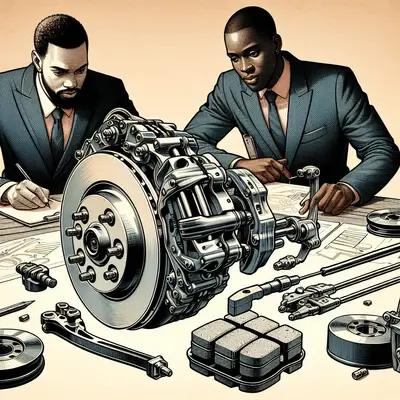
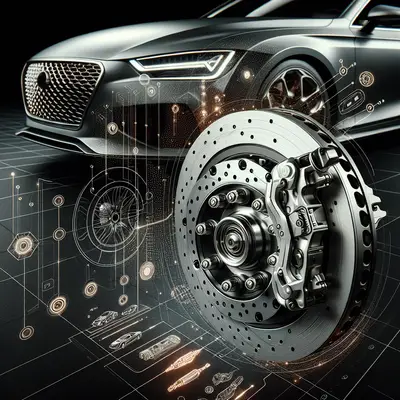
Beneath the simplicity of a pedal press lies an intricate, finely tuned sequence. When you apply the brake, a mechanical input at the pedal is translated by the brake booster and master cylinder into hydraulic pressure. This pressure travels through brake lines to calipers at each wheel, where pads clamp against rotors (or shoes press against drums), converting the vehicle’s kinetic energy into heat through friction.
Modern vehicles overlay this hydraulic core with electronic guardians: Anti-lock Braking Systems (ABS), Electronic Brakeforce Distribution (EBD), Brake Assist, and, increasingly, integrated systems tied into traction and stability control. Each module continuously analyzes wheel speed, pedal force, steering angle, and more, adjusting brake pressure in fractions of a second. To the attentive owner, the brake system is not a single “part” but a carefully orchestrated network, where fluid quality, component cleanliness, and sensor integrity all directly determine how gracefully and safely the vehicle comes to rest.
Insight 1: Brake Feel Is a Precision Instrument, Not a Vague Impression
Most drivers notice brake performance only when something feels obviously wrong; a safety-conscious owner treats pedal feel as a precision gauge. A firm, progressive pedal that responds proportionally to your input indicates that the system is holding hydraulic pressure, that the pads are appropriately bedded, and that the booster is assisting as designed.
Subtle degradations are often early warnings: a pedal that gradually becomes “spongy” may signal moisture-contaminated fluid or entrapped air; a pedal that slowly sinks at a stop can hint at internal master cylinder leakage. An overly sensitive or “grabby” pedal, especially at low speeds, can indicate pad contamination, incorrect friction material, or miscalibrated brake assist. Train yourself to note changes in effort, travel, and responsiveness over weeks and months. Recording such observations—much like a pilot’s log—enables you and your technician to address concerns while they remain small, contained, and far from crisis.
Insight 2: Brake Fluid Is Not Just Fluid—it’s the Silent Lifeline
Brake fluid is often overlooked, yet it is the lifeblood of your entire braking system. Glycol-based fluids (DOT 3, DOT 4, and most DOT 5.1) are hygroscopic, meaning they absorb moisture over time from the atmosphere, even in a closed system. As water content rises, the fluid’s boiling point drops, increasing the risk of “vapor lock” and a sudden, frightening loss of pedal under sustained or repeated hard braking. In parallel, that same moisture subtly corrodes internal components—calipers, master cylinder bores, ABS modulator valves—long before visible symptoms appear.
A refined maintenance philosophy treats brake fluid closer to an expiration-dated safety component than a permanent fixture. Periodic professional testing with a brake fluid tester and scheduled fluid exchanges based on vehicle use (more frequent for heavy city driving, mountainous terrain, towing, or spirited driving) dramatically reduce internal corrosion and preserve the crisp, consistent pedal feel that careful drivers value. Choosing the fluid type specified by the manufacturer—and avoiding incompatible substitutes—ensures that seals, hoses, and ABS components function as engineered, not as improvised compromises.
Insight 3: Pad and Rotor Choices Are a Safety Signature, Not a Commodity
Brake pads and rotors are often treated as interchangeable commodities, yet the friction pairing you select effectively defines your vehicle’s stopping character. Original-equipment (OE) or OE-equivalent components are engineered with a deliberate balance: cold bite, fade resistance, noise behavior, dust levels, and rotor wear are all tuned to the vehicle’s weight, chassis dynamics, and intended use. Deviating from this balance without understanding it can subtly undermine safety.
Aggressive performance pads, for instance, may require higher temperatures to work optimally, resulting in longer stops during everyday, gentle driving. Ultra-hard, low-dust pads can transmit more heat and vibration to rotors, potentially causing noise, cracking, or uneven wear. Conversely, soft “comfort” pads may deliver smooth, quiet stops at the expense of longevity and repeated high-speed stability. Rotors, too, are not identical: metallurgy, vane design, and machining tolerances affect heat dispersion and resistance to warping. For the owner who values composure under emergency braking, it is worth investing in components engineered either by the vehicle manufacturer or by reputable suppliers explicitly validated for your model—not merely “will-fit” parts.
Insight 4: Cleanliness and Torque Discipline Are Hidden Safeguards
Premium brake performance is as much about how components are installed as which components are chosen. Dust, rust scale, and old lubricant on caliper brackets or pad abutment points create subtle binding that prevents pads from retracting cleanly. The result is premature pad wear, elevated temperatures, brake noise, and, at worst, pull or instability during hard stops. Similarly, neglected slide pins or incorrectly applied lubricants can cause calipers to move unevenly, unbalancing braking between wheels.
Torque discipline is equally critical. Lug nuts tightened unevenly or with excessive force can introduce rotor distortion, producing pedal pulsation and steering vibration under braking. Over-tightening caliper bracket bolts or failing to follow manufacturer torque specifications can damage threads or stress components in ways that only manifest at high loads. A sophisticated brake service insists on meticulous surface preparation, judicious use of high-temperature brake lubricants in the correct locations only, and torquing all fasteners—including wheel lugs—to manufacturer specifications with calibrated tools. These invisible practices are what quietly distinguish a routine repair from a truly safety-focused, premium brake service.
Insight 5: Electronics Demand Respect—ABS and Stability Systems Are Not Infallible
Modern brake systems are integrated into broader safety architectures: ABS, traction control, and electronic stability control (ESC) all depend on a constellation of sensors, control modules, and actuators. These technologies are superb assistants, but they are not infallible, nor are they substitutes for well-maintained mechanical brakes and responsible driving.
Wheel speed sensors, tone rings, and wiring harnesses can be compromised by corrosion, impact damage, or careless services. A seemingly minor ABS warning light may indicate that some protective functions—like controlled modulation during emergency stops or stability corrections in evasive maneuvers—are compromised. Likewise, improper tire sizes, uneven tread depths, or mismatched tire types can confuse these systems, subtly degrading their performance. A sophisticated owner treats any brake, ABS, or stability warning as an immediate diagnostic priority rather than a cosmetic annoyance, and insists that repairs respect the full system—mechanical, hydraulic, and electronic—rather than addressing only the most visible symptom.
Integrating These Insights into Everyday Driving
Appreciating your brake system at this level does not require engineering expertise; it requires curiosity, observation, and a refusal to normalize small warning signs. Listen to your brakes in quiet environments, feel for subtle changes in response, and record maintenance with the same care you would give to financial or health records. Partner with a repair facility that shares this mindset—one that explains options, uses appropriate components, observes torque and cleanliness discipline, and treats software updates, calibrations, and system diagnostics as essential, not optional.
When understood and maintained with intention, your brake system becomes more than a mere safety net—it becomes an expression of your standards. Each smooth, confident stop is the visible result of unseen choices: correct fluid, carefully chosen friction materials, precise installation, and a willingness to address issues while they are still subtle. That is the essence of premium brake safety: calm, deliberate preparation long before you ever truly need it.
Sources
- [NHTSA: Anti-Lock Brakes (ABS)](https://www.nhtsa.gov/equipment/anti-lock-brakes-abs) - U.S. National Highway Traffic Safety Administration overview of ABS function and safety benefits
- [NHTSA: Electronic Stability Control](https://www.nhtsa.gov/equipment/electronic-stability-control-esc) - Explains how ESC integrates with braking systems to improve vehicle control
- [SAE International – Brake Fluid Properties and Standards](https://www.sae.org/standards/content/j1703_201008/) - Technical standard detailing requirements and characteristics of automotive brake fluids
- [University of California, Berkeley – Vehicle Braking and Stability Lecture Notes](https://digitalassets.lib.berkeley.edu/publications/ainulindale/veh-dynamics-braking.pdf) - Educational material on vehicle dynamics and braking behavior
- [BMW Group – Brake System Technology Overview](https://www.bmwgroup.com/en/innovation/technologies-and-innovation/brake-systems.html) - Manufacturer perspective on modern brake system architecture and electronic integration
Key Takeaway
The most important thing to remember from this article is that this information can change how you think about Brake Systems.