For drivers who expect more than mere transportation from their vehicles, brake performance is non‑negotiable. It is not just about stopping—it is about how precisely, how consistently, and how quietly the car responds when called upon. Understanding your brake system at a deeper level transforms routine maintenance into a deliberate act of protection, preserving both safety and the refined driving experience you value.
This guide moves beyond basic advice and into the details discerning owners care about—how subtle changes in feel, sound, and component choice quietly shape every stop you make.
The Architecture of Control: How Your Brake System Really Works
Beneath the effortless press of a pedal lies a highly coordinated system designed to convert motion into controlled stillness.
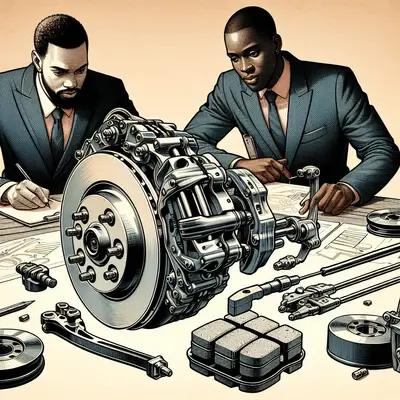
Your brake pedal is connected to a brake booster and master cylinder. When you press the pedal, the booster amplifies your input, and the master cylinder converts that pressure into hydraulic force, pushing brake fluid through lines to each wheel. At the wheels, calipers clamp pads against rotating discs (rotors), converting kinetic energy into heat through friction.
Modern systems layer advanced electronics on top of this hydraulic foundation. Anti-lock braking systems (ABS) prevent wheel lockup, allowing you to steer under heavy braking. Electronic brake-force distribution (EBD) subtly adjusts how much braking each axle receives, compensating for weight shifts and load changes. In higher-end vehicles, brake assist systems detect panic braking and apply maximum force even if you don’t fully depress the pedal.
Understanding this architecture matters because every component has an influence on pedal feel, noise, stopping distance, and confidence. For the safety‑focused owner, “good enough” is no longer sufficient; the goal is consistent, predictable performance under both everyday and demanding conditions.
Five Exclusive Insights for the Safety‑Focused Driver
Certain nuances of brake care rarely appear in generic maintenance advice, yet they matter deeply to those who take safety and refinement seriously. These five insights help you move from reactive brake repair to proactive brake stewardship.
1. Brake Fluid: The Overlooked Guardian of Consistency
Brake fluid is not simply a “fill-it-and-forget-it” item; it is the lifeblood of the entire system.
Brake fluid is hygroscopic—it gradually absorbs moisture from the air through seals, hoses, and reservoir vents. As water content rises, the fluid’s boiling point drops. Under repeated or hard stops, fluid can reach temperatures where that moisture turns to vapor, causing a soft or sinking pedal and, in severe cases, partial brake failure (brake fade).
A sophisticated approach to maintenance treats brake fluid like a time‑limited safety asset. Rather than waiting for obvious issues, have the fluid tested or replaced at regular intervals, often every 2–3 years or as specified by the manufacturer. Premium synthetic DOT 4 or DOT 5.1 fluids offer higher boiling points than typical DOT 3, but must be matched to your vehicle’s specifications.
For performance‑oriented or heavy vehicles, fresh fluid is as important as fresh pads. It is the quiet difference between confident, repeatable pedal feel and a vague, unsettling response when you need precision most.
2. Rotor Quality and Finish: The Hidden Influencer of Smooth Braking
Rotors are not just metal discs; their material, thickness, and surface finish shape the character of every stop.
High-quality rotors maintain consistent thickness and hardness, reducing the risk of pedal pulsation caused by thickness variation or heat spots. Precision machining and balanced design help minimize vibration and noise, supporting that calm, controlled braking experience refined drivers expect. Inferior rotors can warp more easily, glaze pads, and transmit harshness through the steering wheel and pedal.
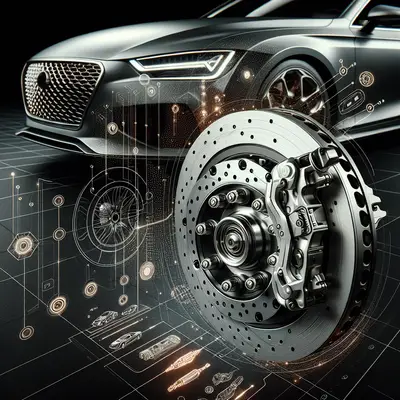
For many vehicles, standard solid rotors are adequate, but when towing, driving in mountainous regions, or favoring spirited driving, consider rotors with improved heat management. Slotted or carefully engineered vented designs can help dissipate heat more effectively—provided they come from reputable manufacturers and are correctly matched to pad material.
Insist on professional rotor inspection rather than assuming they are “fine until they squeal.” Measuring rotor thickness, checking for runout, and inspecting for heat cracks or scoring should be a standard part of a premium brake service, not an optional extra.
3. Pad Compound Choice: Tuning the Personality of Your Brakes
Not all brake pads are created equal; compound choice is a strategic decision, not a generic replacement.
Organic pads tend to offer quiet operation and gentle rotor wear but may fade under sustained heavy braking. Semi‑metallic pads deliver strong, consistent performance and better heat resistance, but often at the cost of more noise and dust. Ceramic pads, a favorite in many premium applications, provide smooth, quiet braking with low dust and excellent wear characteristics—though performance in extreme conditions varies by brand and formulation.
For the safety‑conscious owner, the right question is not “What’s cheapest?” but “What best matches my driving and my expectations?” A heavier SUV carrying family passengers regularly may benefit from a quality semi‑metallic or advanced ceramic pad engineered for stability under load. A commuter sedan in an urban setting may prioritize low noise and dust.
The most refined setups pair compatible pad and rotor materials and rely on reputable brands whose compounds have been thoroughly tested. When properly matched, the result is a predictable, linear pedal response and a quiet, composed stop that feels deliberate, not abrupt.
4. Calipers, Slides, and Hardware: The Unsung Authors of Brake Feel
Drivers often focus on pads and rotors, yet the components that move and hold them are equally critical.
Brake calipers and their guide pins must move freely and evenly to apply even pressure to both sides of the rotor. When pins corrode or lubrication fails, pads can drag, wear unevenly, or seize. This not only shortens component life but also erodes refinement—causing pulling, noise, and inconsistency from one stop to the next.
Premium brake service includes more than just swapping pads. It means:
- Cleaning and lubricating caliper slides with high‑temperature brake-specific grease
- Replacing worn or corroded hardware (springs, clips, shims) rather than reusing them
- Inspecting dust boots and seals for cracks that invite contamination
- Ensuring pistons retract smoothly, without sticking
These details may never appear on your invoice as a dramatic line item, yet they are the reason some cars feel beautifully composed under braking while others feel coarse, grabby, or uneven—even with similar pad and rotor quality.
5. Interpreting Subtle Signals: A Refined Driver’s Early Warning System
By the time a brake issue becomes obvious, you have missed several earlier invitations to act.
Discerning drivers train themselves to notice minor shifts in feedback and treat them as prompts, not annoyances. Examples include:
- A slightly longer pedal travel before engagement
- A change in pedal firmness—either spongier or noticeably harder
- A faint, intermittent noise (squeaks, scrapes, or rhythmic rubbing) that appears under light braking
- A delicate vibration through the pedal or steering wheel at highway speeds when braking
- A consistent bias—vehicle gently pulling to one side, especially under more assertive stops
None of these necessarily indicate imminent failure, but all of them deserve timely inspection. A premium mindset views such signs as opportunities to address a small issue before it matures into compromised safety, costly rotor damage, or an unnerving experience in an emergency stop.
Treating these subtleties with respect is not overcautious—it is the hallmark of a driver who understands that safety and refinement are two sides of the same discipline.
Integrating Brake Care Into a Premium Ownership Experience
Thinking of brakes only when they squeal or fail an inspection falls short of the standard set by attentive owners. A more elevated approach weaves brake care into your overall vehicle philosophy.
Schedule periodic inspections that go beyond quick visual checks. Ask your service provider specific questions: fluid condition and age, rotor thickness and runout measurements, pad compound and expected performance, caliper operation, and hardware integrity. Favor parts and practices that support both safety and driving character, not merely short‑term cost savings.
This attention to detail pays off quietly. Stops feel confident, composed, and repeatable. Long drives in adverse weather feel less stressful. Your vehicle responds in a way that reflects the care invested in it—not just in terms of reliability, but in the poised, predictable behavior that defines a truly refined driving experience.
In the end, premium brake care is not about extravagance. It is about embracing the idea that the quality of every journey is shaped as much by how gracefully you can stop as by how quickly you can go.
Sources
- [National Highway Traffic Safety Administration (NHTSA) – Brakes and Safety](https://www.nhtsa.gov/equipment/brakes) - Overview of brake system safety, common defects, and regulatory context
- [Federal Motor Carrier Safety Administration – Brake System Fact Sheet](https://www.fmcsa.dot.gov/safety/brakes/brake-system-fact-sheet) - Technical background on brake function, components, and performance considerations
- [Brembo – How the Braking System Works](https://www.brembo.com/en/company/news/how-the-braking-system-works) - Detailed explanation of modern disc brake architecture from a leading brake manufacturer
- [University of Nebraska–Lincoln – Brake Fluid Test Study](https://digitalcommons.unl.edu/usarmyresearch/241/) - Research on brake fluid condition, moisture contamination, and safety implications
- [Continental – Basics of ABS, EBD, and ESC](https://www.continental-automotive.com/en-sg/Passenger-Cars/Systems/Vehicle-Dynamics/ABS) - Technical overview of electronic brake control systems and their role in modern braking safety
Key Takeaway
The most important thing to remember from this article is that this information can change how you think about Brake Systems.