For the discerning driver, a brake pedal is not merely a control—it's a covenant of trust. Every press should translate into poised, predictable deceleration, regardless of speed, weather, or road surface. Understanding how your brake system truly functions—and how to preserve its integrity—turns routine maintenance into a deliberate act of safety and refinement. This is not about basic tips; it’s about cultivating an elevated, almost curatorial approach to the components that stand between confidence and catastrophe.
The Anatomy of Control: Seeing Your Brake System as a Unified Orchestra
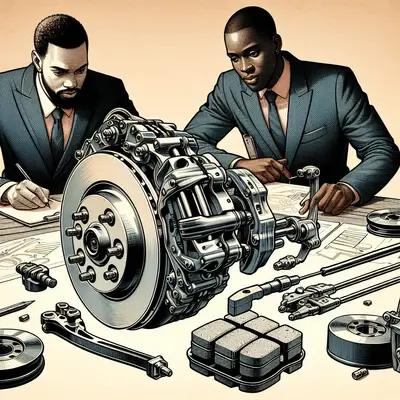
A modern brake system is far more than pads and rotors; it is a precisely coordinated ensemble of hydraulics, electronics, friction materials, and software. At its core are the brake pedal, master cylinder, brake lines, calipers, pads, and rotors or drums, but contemporary vehicles layer on anti-lock braking systems (ABS), electronic brake-force distribution (EBD), and, in many luxury models, brake assist and stability control. Each part influences not only stopping distance, but the character of every deceleration—whether it feels abrupt, progressive, or seamlessly composed.
Seeing the system as a whole changes how you respond to early warning signs. A slightly longer stopping distance is not “just wear”; it might indicate deteriorating fluid, swollen rubber hoses, or a fading booster. A faint vibration under hard braking might not be a “warped rotor” alone but the interplay of pad material, uneven rotor deposits, and electronic modulation from ABS. When you conceive of braking as a unified system, you’re less likely to ignore subtle symptoms or accept quick, parts-only fixes that address the symptom but not the underlying imbalance.
Exclusive Insight 1: Brake Feel Is a Diagnostic Language, Not a Preference
Enthusiasts often talk about “firm” vs. “soft” brakes as a matter of taste, yet brake feel—how the pedal responds through your foot—is a sophisticated diagnostic language. A gentle, consistent increase in resistance as you press the pedal signals a healthy hydraulic system and proper pad-to-rotor engagement. Deviations from that expected feel are often your earliest, and most reliable, clues.
A spongy pedal may indicate air in the lines, moisture-laden brake fluid, or degraded rubber hoses that expand under pressure. A pedal that requires more travel than usual can point to worn pads or a failing master cylinder. A pedal that feels excessively firm, with very little travel, may be the result of seized caliper slides or an obstruction within the hydraulic circuit. Attentive drivers treat each change in pedal feedback as an actionable data point, not a minor quirk. If you can describe your pedal feel precisely to a technician—“initial bite has faded,” “pedal travel increased over the last month,” “firm, but with a pulse at lower speeds”—you elevate both the conversation and the caliber of the repair.
Exclusive Insight 2: Brake Fluid Is the Quiet Guardian of Consistent Performance
Brake fluid is the unsung hero of every confident stop, yet it’s often neglected until it becomes a liability. As a hygroscopic fluid, it steadily absorbs moisture from the environment, even in sealed systems. Over time, this lowers its boiling point and compromises its ability to maintain pressure under intense or repeated braking. The result is brake fade: the pedal feels longer or softer during demanding stops, as vapor bubbles form and compress in place of fluid.
For drivers who expect unwavering performance—especially with heavier vehicles, spirited driving, or frequent highway travel—brake fluid service should be treated with the same seriousness as tire replacement. Manufacturer guidelines are a useful baseline, but conditions matter: frequent stop-and-go traffic, mountainous terrain, or towing all justify more frequent fluid flushing. When serviced, insist on the correct fluid specification (DOT 3, DOT 4, or DOT 5.1, as specified in your owner’s manual) rather than generic “compatible” options. Premium driving is not just about power and comfort; it is about insisting that the invisible elements of your safety system receive equal attention.
Exclusive Insight 3: Rotor Condition Is About Surface Quality, Not Just Thickness
Many drivers think rotors are acceptable as long as they haven’t reached their minimum thickness, but surface quality is equally critical to both safety and refinement. A rotor can still be above spec and yet deliver inconsistent, noisy, or shudder-prone braking if its surface has uneven deposits, grooves, or subtle runout (a slight side-to-side wobble as it rotates). These imperfections often masquerade as “warped” rotors, even though the underlying issue is typically uneven friction material transfer from the pads.
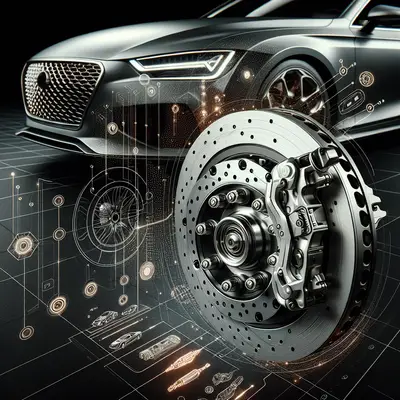
A truly refined brake service evaluates thickness, surface finish, runout, and parallelism (uniform thickness across the rotor). In some cases, a precise on-car machining (if recommended for your vehicle) can restore surface integrity; in others, high-quality rotor replacement is more appropriate than repeated resurfacing. The pairing of pad compound to rotor design—solid, vented, drilled, or slotted—also influences noise, dust, and stopping character. A serious approach to rotor condition is as much about how the car feels and sounds under braking as it is about emergency stopping distances.
Exclusive Insight 4: Electronic Brake Aids Are Powerful—but Not Infallible
Modern brake systems are increasingly defined by their electronics. ABS, traction control, stability control, and advanced driver-assistance systems (ADAS) like automatic emergency braking are remarkable layers of protection. They can prevent wheel lockup, maintain directional stability, and even initiate braking when a collision appears imminent. Yet these systems are tuned with the expectation that the underlying mechanical components—pads, rotors, calipers, and fluid—are in proper condition.
An ABS warning light, longer activation times on wet roads, or subtle pulsing during moderate stops can indicate issues ranging from sensor contamination to inconsistent rotor surfaces. Moreover, technologies like automatic emergency braking rely on sensors and cameras that must be properly calibrated after certain repairs or collisions. The sophisticated driver regards these systems not as replacements for mechanical integrity and attentive driving, but as an additional, highly capable safety net. Ensuring that your mechanical brake components are kept in exemplary condition allows these electronic aids to perform at the level their engineers intended.
Exclusive Insight 5: Brake Maintenance Is a Strategic, Not Reactive, Practice
Most brake work in the general market is reactive—repairs triggered by noise, grinding, or dashboard alerts. For a driver who values both safety and refinement, this is an unnecessarily risky and inelegant approach. A strategic maintenance philosophy aims to anticipate needs rather than respond to failures, integrating brake care into a broader, long-range stewardship of the vehicle.
This might mean scheduling inspections based on mileage and driving style rather than waiting for squeals, proactively replacing pads before they reach their wear indicators, and planning rotor or fluid service as part of a multi-year maintenance roadmap. Keeping a personal log of brake work—dates, parts used, even how the car felt before and after—transforms maintenance into an informed, data-driven process. Over time, this attentiveness yields quieter operation, more consistent pedal feel, and fewer surprises. More importantly, it ensures that when you need the full capability of your brakes—on a rain-slick highway, in an unexpected stop—they respond with the poised immediacy you’ve deliberately cultivated.
Conclusion
An exceptional brake system is never an accident; it is the result of informed choices, attentive observation, and uncompromising standards. When you listen to pedal feel as a language, treat brake fluid as a critical performance component, scrutinize rotor condition beyond basic wear, respect the limits and needs of electronic aids, and adopt a strategic maintenance mindset, you transform everyday driving into a more controlled, composed experience. In a world that often celebrates acceleration, there is a quiet sophistication in mastering the art and science of stopping well—and knowing that, at any speed, control is firmly in your hands.
Sources
- National Highway Traffic Safety Administration (NHTSA) – Brakes and Safety Systems - Overview of brake system components, safety standards, and recalls
- U.S. Department of Transportation – Brake System Facts - Government guidance on braking performance and system integrity
- Society of Automotive Engineers (SAE) – Brake Fluid and Hydraulic Systems - Technical discussion of brake fluid standards and performance considerations
- AAA – Understanding Your Car’s Braking System - Consumer-focused explanation of modern brake technology and maintenance
- University of Nebraska–Lincoln, Department of Mechanical & Materials Engineering – Vehicle Dynamics and Braking Fundamentals - Educational resource on braking forces, stability, and vehicle control
Key Takeaway
The most important thing to remember from this article is that this information can change how you think about Brake Systems.