In a world where performance badges and luxury trims often steal the spotlight, the true measure of a refined driving experience is found in how gracefully a vehicle can come to a stop. A well‑engineered brake system is less about drama and more about composure—quiet, predictable, and utterly trustworthy. For the discerning driver, understanding what happens between pedal and pavement is not merely technical curiosity; it’s an elevated form of safety stewardship. This guide explores the brake system with a premium lens and offers five exclusive insights that reward drivers who value control, confidence, and care in every mile.
The Brake System as an Integrated Safety Network
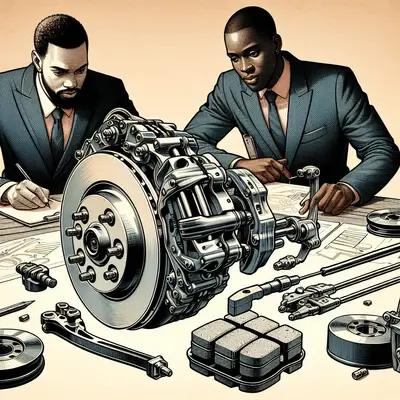
Most drivers think of “brakes” as pads and rotors, yet the modern brake system is a carefully orchestrated network of mechanical, hydraulic, and electronic components. When you press the pedal, a brake booster amplifies your input, a master cylinder converts that effort into hydraulic pressure, and calipers and wheel cylinders translate that pressure into clamping force at each wheel. Anti-lock braking systems (ABS), electronic brake-force distribution (EBD), and stability control refine that process hundreds of times per second, ensuring optimal grip and control.
For the attentive owner, it’s useful to think of this system not as a single component to “fix when it squeaks,” but as a calibrated ensemble that should remain in balance. Premium performance does not come from one flawless part but from harmonious operation: fluid that transmits pressure consistently, friction materials that match the vehicle’s weight and driving style, and sensors that communicate with the vehicle’s central safety architecture. Respecting that integration is the foundation for every other advanced brake decision you make.
Materials, Heat, and the Hidden Language of Brake Feel
Brake feel—the subtle dialogue between vehicle and driver—is shaped not only by engineering, but by material science. Rotors (or discs) must dissipate heat evenly; pads must withstand high temperatures while maintaining a consistent friction profile; calipers must apply force evenly without flex or binding. Together, these characteristics define how the pedal responds under gentle city driving, spirited highway braking, or sustained descents on mountain roads.
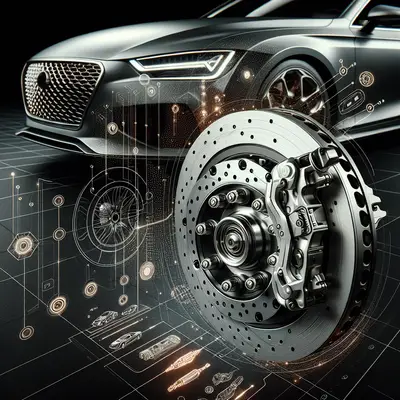
Premium vehicles often employ vented, slotted, or even two‑piece rotors, along with advanced pad compounds designed to keep friction predictable across a wide temperature range. Inferior or mismatched components can result in soft pedal feel, longer stopping distances, brake fade, or an inconsistent bite point. For a refined driver, the objective is not simply “strong braking,” but linear, repeatable performance: the same quiet authority at the first stoplight of the day and after a demanding downhill run.
Five Exclusive Insights for the Safety‑Focused, Detail‑Oriented Driver
For owners who expect more than basic maintenance, these five nuanced insights elevate brake care from routine service to an informed safety strategy.
1. Brake Fluid Aging Is Time‑Critical, Not Just Mileage‑Dependent
Brake fluid is hygroscopic—it absorbs moisture from the atmosphere over time, even in a closed system. As water content rises, the boiling point of the fluid drops, increasing the risk of vapor formation under hard braking. The result can be a spongy pedal or, in severe cases, temporary loss of braking force.
What many careful drivers miss is that brake fluid degradation is primarily time‑based. Even low‑mileage, gently driven vehicles can have compromised fluid if years—not miles—have elapsed since the last change. A premium routine typically involves testing or replacing brake fluid every 2–3 years (or as specified by the manufacturer), regardless of odometer readings. This time awareness ensures your braking performance remains consistent when you need it most—during an emergency stop, not just in daily traffic.
2. Matching Pad Compounds to Your Driving Profile Is a Safety Choice
Brake pads are not interchangeable commodities. Different compounds (organic, semi‑metallic, ceramic, and performance‑oriented formulations) have distinct characteristics for noise, dust, initial bite, high‑temperature stability, and rotor wear. Installing the wrong type, even a “high‑performance” one, can unintentionally undermine your real‑world safety.
For example, a track‑focused pad may work poorly when cold, extending stopping distances during commuting. Conversely, a soft, comfort‑oriented compound may struggle with repeated high‑speed stops on steep grades. A sophisticated owner weighs daily conditions—urban vs. rural, flat vs. mountainous, light vs. heavy loads—and chooses pads whose friction profile is optimized for those realities. This is not about chasing performance specs; it’s about aligning material behavior with your specific safety envelope.
3. Rotor Condition Influences Advanced Safety Systems
Rotors are often reduced to two questions: “Are they warped?” and “Do they need replacing?” However, modern vehicles rely on consistent rotor friction and surface quality for the proper operation of ABS, traction control, and stability systems. Uneven rotor surfaces, hotspots, and excessive runout can introduce subtle pulsations that not only affect comfort, but also send confusing signals to the brake controller.
Overly thinned rotors—machined repeatedly or run beyond their minimum thickness—are more susceptible to overheating and reduced stopping performance. For a safety‑driven owner, the threshold for replacing rotors is not merely “when they fail,” but when they begin to compromise the system’s ability to modulate braking smoothly under electronic control. Prioritizing rotor integrity is effectively prioritizing the full capability of every safety algorithm built into your vehicle.
4. Brake Balance and “Pull” Reveal More Than Just Alignment
If a vehicle consistently pulls to one side when braking, many drivers immediately suspect alignment or tire issues. Yet an imbalance in hydraulic pressure, caliper operation, or pad friction side‑to‑side can be an equally significant contributor—and often more urgent from a safety perspective.
A sticky caliper slide, a partially seized piston, or uneven pad wear can cause one wheel to do more of the braking work, destabilizing the vehicle’s behavior under emergency stops. For a discerning driver, any directional pull under braking is treated as a priority diagnostic clue, not a minor annoyance. A thorough brake inspection seeks symmetry: even pad thickness, consistent rotor wear, and free‑moving hardware on all corners. True confidence at the pedal comes from knowing that the entire vehicle, not just one axle or wheel, shares the stopping effort evenly.
5. Parking Brakes and Regenerative Braking Are Part of the Same Safety Story
Modern vehicles, particularly hybrids and EVs, blur the line between friction braking and other systems. Regenerative braking shifts part of the deceleration workload to the electric motor, subtly altering how frequently and how hard the friction brakes are used. As a result, pads and rotors may age more with time and corrosion than from wear, sometimes developing rust ridges or uneven surfaces in low‑use conditions.
Simultaneously, electronic parking brakes and integrated “hold” functions change how the rear brakes are applied and maintained. A refined owner understands that infrequent use can be as problematic as overuse. Periodic, deliberate use of the brakes under firm, controlled stops—even in a vehicle that likes to coast and regenerate—can help keep friction surfaces clean and effective. Regular exercise of the parking brake (following manufacturer guidance) also keeps cables, motors, and mechanisms from seizing, ensuring that this often‑overlooked safety feature is fully available in an emergency or on steep terrain.
Reading the Subtleties: How to Interpret Your Brake System’s Signals
Premium brake care begins with noticing small changes early. Pedal travel that feels slightly longer, a faint vibration at highway speeds during light braking, a new tone in the background—these clues often surface well before any warning light appears. A sophisticated driver trains themselves to catalog these impressions: when they occur, at what speeds, during which types of stops.
Equally important is understanding that advanced driver‑assistance systems (ADAS)—adaptive cruise control, collision mitigation, lane‑keeping support—often rely on the brake system to execute their decisions. If the foundation (fluid, pads, rotors, calipers) is compromised, the vehicle’s ability to deliver on its promised safety envelope may be reduced, even if there are no dashboard alerts. Partnering with a trusted, well‑equipped service professional, and sharing specific observations rather than simply requesting “a brake check,” ensures that the response to those early signals is precise, not generic.
Conclusion
A truly refined driving experience is defined not by how quickly a vehicle accelerates, but by how quietly and confidently it can come to rest. For the safety‑conscious owner, the brake system is less a background utility and more a carefully maintained instrument—one that deserves thoughtful attention to materials, fluid health, system balance, and modern electronic integration. By embracing nuanced practices such as time‑based fluid service, tailored pad selection, rotor integrity, brake balance, and the interplay with regenerative and parking systems, you elevate every journey. The reward is subtle but profound: a sense of composure at the pedal, and the assurance that when you ask your vehicle to stop, it will do so with the same calm precision you expect from every other aspect of your drive.
Sources
- National Highway Traffic Safety Administration (NHTSA) – Brake Safety Overview - Authoritative guidance on brake system safety, recalls, and component performance
- U.S. Department of Transportation – Brake Systems and ABS Information - Explains how ABS and related systems function to enhance control
- SAE International – Fundamentals of Brake Systems - Technical overview of modern braking components and design considerations
- Bosch Mobility Solutions – Brake Systems and ABS Technology - Manufacturer-level insight into system integration, ABS, and electronic brake controls
- University of California, Berkeley – Vehicle Braking and Safety Systems Lecture Notes - Academic perspective on braking dynamics, stability, and control algorithms
Key Takeaway
The most important thing to remember from this article is that this information can change how you think about Brake Systems.