Brake systems are the quiet guardians of every journey—felt more than seen, trusted more than discussed. For drivers who value composure, precision, and safety above all, understanding how brakes are repaired is not a hobbyist’s curiosity; it is an essential discipline. This guide elevates brake repair from a vague service line item to a clearly understood process, allowing you to supervise repairs with discernment and insist on standards worthy of the vehicle you drive.
Understanding the Modern Brake System as a Whole
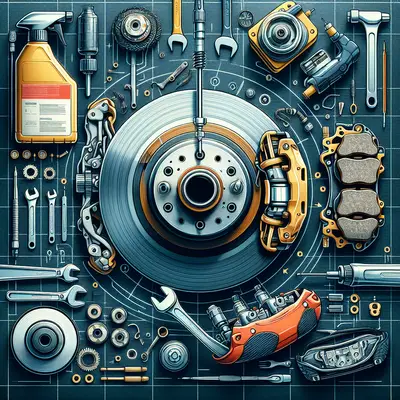
Although most service conversations focus on pads and rotors, a modern brake system is an integrated network of hydraulic, electronic, and mechanical components that must work in flawless harmony. At its core, the master cylinder converts pedal pressure into hydraulic force, sending brake fluid through lines and hoses to calipers or wheel cylinders that clamp pads or shoes against rotors or drums. Overlaying this mechanical foundation are advanced systems such as ABS (anti-lock braking), traction control, and electronic stability control, which modulate braking in milliseconds to maintain grip and control.
For a discerning owner, it is important not to see these components in isolation. A soft pedal may not be “just air in the lines,” but a subtle indicator of moisture-logged brake fluid or master cylinder wear. A pulse in the pedal may not only be a “warped rotor” but also a record of prior overheating, inadequate torque procedures, or low-quality components. Viewing the brake system as a unified ecosystem allows you to ask the right questions and recognize when a proposed repair is addressing symptoms instead of underlying causes.
What Distinguishes a Precision Brake Repair from a Basic Pad Swap
Many service centers advertise “brake jobs” as if they were interchangeable, but the difference between a quick pad swap and a precision repair is substantial. A basic service might involve simply replacing pads and perhaps resurfacing rotors. A properly executed, premium-level brake repair goes significantly further, beginning with a thorough inspection of pad wear patterns, rotor surface condition, caliper operation, hardware integrity, and fluid quality.
Refined service providers also clean and lubricate caliper slide pins with high-temperature, brake-appropriate lubricants, verify that pads can move freely in their brackets, remove corrosion from contact points, and ensure that dust boots and seals are intact. They use torque wrenches—not impact guns—to tighten caliper bracket bolts and wheel lugs to manufacturer specifications, reducing the risk of rotor distortion. The result is not just restored stopping power, but a calmer, more consistent pedal feel and quieter operation that stands up over time.
Five Exclusive Insights for Owners Serious About Brake Safety
Beyond the fundamentals, there are subtler brake repair practices that distinguish truly safety-focused ownership. These five insights rarely appear on invoices, yet they profoundly influence performance, longevity, and peace of mind.
1. Brake Fluid is a Safety Component, Not a Footnote
Brake fluid quietly ages in the background, absorbing moisture over time due to its hygroscopic nature. As water content rises, the fluid’s boiling point falls, which can lead to brake fade under sustained or emergency braking and corrosion inside lines, calipers, and the ABS hydraulic unit. Many vehicles go years without a fluid exchange simply because it is not demanded by the driver.
A refined approach treats fluid management as essential. Ask your shop for a documented brake fluid test (many use electronic or chemical testers) and compare results against manufacturer or DOT recommendations. Clear, light-colored fluid does not guarantee quality; its water content and boiling point matter more. Insist that fluid changes be performed using the correct specification (DOT 3, 4, or 5.1 as required), and that ABS systems be bled following proper procedures to avoid trapped air in control modules.
2. Pad and Rotor Pairing Matters More Than Brand Prestige
Premium brake pads and rotors are not universally superior; they must be correctly matched to your driving profile and vehicle. Aggressive, high-friction pads may shorten stopping distances but can generate more dust, noise, and rotor wear. Conversely, ultra-quiet, comfort-focused compounds may offer a softer pedal feel and slightly longer stopping distances.
An owner who takes brake safety seriously asks not only for “good parts” but for parts that are engineered to work as a system. Original equipment (OE) or OE-equivalent friction materials are usually calibrated to the car’s weight, ABS tuning, and suspension behavior. When considering performance or aftermarket options, look for manufacturers that provide tested friction coefficients, rotor metallurgy specifications, and compatibility with your car’s electronic aids. The goal is predictable, repeatable braking behavior—especially during hard stops.
3. Proper Bedding-In Is a Crucial Final Step, Not an Optional Ritual
One of the least-discussed aspects of brake repair is pad and rotor “bedding,” the controlled process of transferring a thin, even layer of pad material onto the rotor surface. This film is what allows consistent friction and stable braking behavior. When brakes are not bedded properly—either by the technician or the driver—pads may deposit unevenly on the rotor, leading to vibrations, noise, and the impression of warped rotors.
After a brake repair, request clear bedding instructions and follow them precisely. This often involves a series of moderate decelerations from varying speeds, avoiding full stops immediately after hard braking, and allowing cool-down intervals. Far from being a racing-only practice, proper bedding-in reduces the chance of shudder, improves pedal feel, and helps new components achieve their designed performance envelope far more reliably.
4. Hardware, Mounting Surfaces, and Torque Define Long-Term Smoothness
A premium brake repair devotes careful attention to the less glamorous details: clips, shims, abutment hardware, and mounting surfaces. Corroded hub faces, for example, can prevent rotors from sitting perfectly flat, resulting in lateral runout that eventually becomes pedal pulsation. Worn or seized pad hardware can cause uneven wear or binding, while missing or improvised shims can lead to noise and vibration.
For vehicles that prioritize refinement, these details matter greatly. Ask specifically whether the shop is:
- Cleaning hub faces and checking rotor runout with a dial indicator.
- Replacing pad hardware rather than reusing worn clips.
- Applying anti-seize or appropriate coatings only where specified, never on friction or clamping surfaces.
- Using calibrated torque wrenches on wheel lugs to the correct specification.
These practices do not usually appear on coupons, yet they are precisely what keeps braking behavior smooth and composed many thousands of miles after the repair.
5. Post-Repair Road Testing Should Be Structured, Not Casual
A short drive around the block is not sufficient validation for a sophisticated brake system. High-quality shops conduct structured road tests, evaluating performance under a variety of conditions: low-speed creeping, moderate stops from urban speeds, and controlled higher-speed decelerations (where safe and legal). They listen for noise, feel for pull or drift under braking, assess pedal travel and firmness, and confirm that ABS engagement, if triggered, is smooth and unobtrusive.
As an owner, you can mirror this thoroughness. After any significant brake work, perform your own methodical evaluation in a safe, low-traffic environment. Take note of:
- Any change in pedal travel or initial bite.
- The car’s tendency to pull under firm braking.
- New noises: grinding, squealing, clicking, or scraping.
- Vibration through the steering wheel or seat under braking.
If something feels different in a way that you cannot confidently explain, treat it as a prompt for immediate follow-up, not something to “monitor.” A refined standard of safety leaves little room for doubt.
How to Collaborate Effectively with Your Brake Technician
Brake repairs deliver the best results when the owner and technician work as partners, not as adversaries. Instead of simply approving the lowest-priced option, begin each visit with a clear description of your driving profile: city or highway bias, frequency of long descents, towing, spirited driving, or heavy stop-and-go commuting. These details guide component selection and service recommendations more accurately than generic mileage intervals.
Request to see the removed components (pads, rotors, hardware) and ask for a brief interpretation of their condition. Uneven pad wear might reveal a sticky caliper; heat spots on rotors might suggest prior overloading or low-grade materials. This conversation turns your repair history into a narrative of how the car is actually being driven, allowing you to adjust habits—such as resting a foot lightly on the brake, or descending long grades without engine braking—that quietly degrade brake performance. Over time, this collaborative, evidence-based approach yields safer, smoother stops and fewer unexpected major repairs.
Elevating Brake Care from Necessary Expense to Quiet Assurance
When brake repairs are approached with nuance and precision, they cease to be an occasional financial burden and become an ongoing investment in control, comfort, and safety. Understanding how components interact, insisting on thoughtful procedures, and paying attention to subtleties like fluid condition, bedding-in, and hardware quality places you in a different category of owner—one who does not leave stopping power to chance.
In the end, the measure of a well-maintained brake system is not only how quickly it can stop a vehicle, but how composed, predictable, and confidence-inspiring it feels every time your foot meets the pedal. By embracing the refined practices outlined here and engaging more deeply with the repair process, you transform each service visit into an opportunity to strengthen the quiet assurance that your vehicle will respond flawlessly when it matters most.
Sources
- [National Highway Traffic Safety Administration (NHTSA) – Brakes and Safety](https://www.nhtsa.gov/equipment/brakes) - Federal guidance on brake systems, components, and safety considerations
- [U.S. Department of Transportation – Brake Fluid and Hydraulic Systems Overview (FMVSS 116)](https://www.ecfr.gov/current/title-49/subtitle-B/chapter-V/part-571/section-571.116) - Regulatory standards and technical details for brake fluid types and performance
- [Society of Automotive Engineers (SAE) – Brake System Design and Testing](https://www.sae.org/standards/content/j2789_201006/) - Industry-standard perspectives on brake performance, testing, and design parameters
- [AAA Automotive – Brake System Basics](https://www.aaa.com/autorepair/articles/brake-system) - Clear, consumer-focused explanations of brake components and maintenance needs
- [University of Nebraska–Lincoln – Vehicle Braking and Safety Fundamentals](https://engineering.unl.edu/downloads/files/wddc/Vehicle_Braking_Systems.pdf) - Educational overview of braking principles, heat, friction, and system behavior
Key Takeaway
The most important thing to remember from this article is that this information can change how you think about Repair Guides.