For drivers who view every journey as an exercise in precision, the brake system is far more than a mechanism for stopping. It is a curated blend of engineering, feel, and safety—an unseen guardian that must perform flawlessly, every time. Understanding how your brakes truly work, and how to protect their performance, is the hallmark of a driver who refuses to leave safety or refinement to chance.
This article steps beyond basic maintenance. It offers a deeper, more sophisticated look at brake systems, along with five exclusive insights that discerning car owners can use to elevate both safety and driving experience.
The Brake System as a Complete Safety Ecosystem
Brakes are not a single component; they are a tightly integrated ecosystem. When you press the pedal, you activate a chain of events that depends on hydraulic pressure, friction materials, heat management, and electronic controls working in perfect concert.
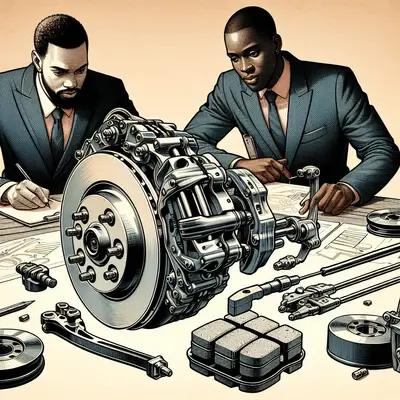
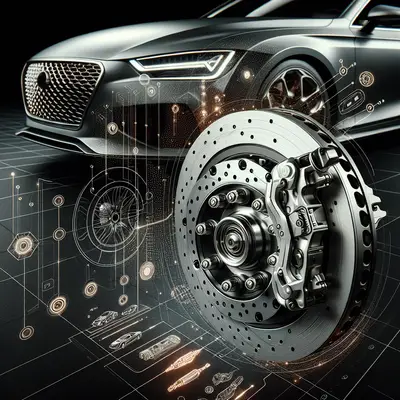
Modern systems typically include a brake pedal, master cylinder, brake lines, calipers (or wheel cylinders for drums), pads or shoes, rotors or drums, and electronic control modules. Advanced features such as ABS (Anti-lock Braking System), ESC (Electronic Stability Control), and brake assist continuously monitor wheel speed, steering input, and vehicle dynamics. They subtly modulate braking force to keep the car stable and controllable—even when the driver is reacting instinctively rather than strategically.
What separates a merely functional system from a truly refined one is calibration: how the pedal feels, how predictably the vehicle responds under emergency braking, and how consistent the performance remains over time. A sophisticated driver understands that this level of refinement is preserved, not assumed.
Inside the Engineering: How Modern Systems Deliver Confidence
At its core, a hydraulic brake system translates relatively gentle pedal pressure into powerful clamping force at the wheels. When you press the pedal, a pushrod moves pistons inside the master cylinder, building pressure in brake fluid. This pressure travels through steel lines and flexible hoses to calipers, which squeeze brake pads against rotors, converting kinetic energy into heat through friction.
Modern vehicles build on this foundation with advanced technology:
- ABS pulses brake pressure to prevent wheel lockup and preserve steering control.
- Electronic Brakeforce Distribution (EBD) adjusts brake force between front and rear wheels for stability and shorter stopping distances.
- Automatic Emergency Braking (AEB) can detect potential collisions and apply brakes faster and harder than most human reactions.
- Regenerative braking (in hybrids/EVs) blends friction braking with energy recovery through electric motors, changing both pedal feel and system demands.
What matters for the discerning owner is not memorizing acronyms, but recognizing how these systems interact. Any irregularity in feel—sponginess, delay, sudden aggressiveness, or inconsistency from one stop to the next—is a signal that this careful balance may be compromised and deserves immediate attention.
Exclusive Insight #1: Pedal Feel Is a Precision Instrument, Not a Convenience
Many drivers treat pedal feel as subjective preference; sophisticated drivers treat it like a diagnostic instrument.
A premium brake system should feel:
- Linear – Increased pedal pressure leads to predictably increased braking.
- Solid, not wooden – Firm resistance without feeling dead or unresponsive.
- Consistent – Similar response whether in city traffic or on a long descent.
Subtle shifts in pedal behavior can reveal specific underlying issues:
- Gradually softening pedal over weeks may suggest minor fluid leaks or air intrusion.
- Pedal that sinks slowly at a red light can indicate an internal master cylinder failure.
- Pedal that feels firm but requires extra distance to stop may reveal pad glazing, rotor contamination, or fading friction material.
- A pedal that becomes firmer and more responsive after several stops can suggest moisture in the fluid expanding when heated.
Treat your brake pedal as a finely tuned gauge. Any deviation from its usual character—even if the car still stops—should be documented and discussed with a trusted technician before it evolves into a genuine safety risk.
Exclusive Insight #2: Brake Fluid is the System’s Silent Luxury—Or Its Weakest Link
Brake fluid is easy to overlook because it is out of sight and seldom discussed. Yet it is fundamental to the quality and consistency of your braking experience.
Brake fluid is hygroscopic; it gradually absorbs moisture from the atmosphere. Over time, this lowers its boiling point and promotes corrosion within lines, calipers, and ABS components. In demanding situations—long downhill drives, spirited motoring, or heavy loads—moisture-laden fluid can boil, creating vapor pockets that compress under pressure. The result is a suddenly soft or sinking pedal when you need it firmest.
A refined brake care routine includes:
- Regular replacement by time, not only mileage – Many manufacturers recommend every 2–3 years, even for low-mileage vehicles.
- Using the correct specification (DOT 3, 4, 5.1) – Upgrading fluid without understanding compatibility and system design can be counterproductive.
- Avoiding “topping off” as a habit – Low fluid can indicate worn pads or leaks; simply adding fluid may mask an issue rather than solve it.
- Insisting on proper bleeding techniques – Especially on vehicles with ABS or complex systems that require a scan tool for correct bleeding sequences.
For the discerning owner, fresh, correctly specified brake fluid is the invisible luxury that preserves pedal feel, responsiveness, and long-term system health.
Exclusive Insight #3: Brake Noise and Vibration Are Precision Clues, Not Mere Annoyances
Squeals, clicks, and vibrations are often dismissed as bothersome but harmless. In a carefully maintained vehicle, they are treated as messages from the system—each with a distinct cause and implication.
Common signals and what they may indicate:
- High-pitched squeal at low speeds: Could be wear indicators contacting the rotor (a designed warning of thin pads) or light surface rust being cleared after parking in damp conditions.
- Grinding or growling: Often indicates pads worn down to the metal backing plate, damaging rotors and drastically reducing braking efficiency.
- Pulsation in the pedal at moderate braking: Can suggest rotor thickness variation or uneven deposits on the rotor surface, not necessarily a warped disc—but both affect smoothness and stopping consistency.
- Clicking once per wheel revolution at low speed: May indicate loose hardware, improperly seated pads, or a small stone lodged between rotor and shield.
Refined brake care means never normalizing new noises or sensations simply because the car “still stops.” The earlier these subtleties are investigated, the more likely you are to preserve the precision and quiet excellence you expect from your vehicle.
Exclusive Insight #4: Driving Style is a Design Variable in Your Brake System’s Life
Brake engineering assumes a certain style of use. When your driving habits diverge from that assumption—toward more aggressive or more protective—your system responds accordingly.
Premium driving practices that meaningfully protect your brakes include:
- Anticipatory braking – Looking further ahead, easing off the accelerator earlier, and using gentle, progressive braking rather than abrupt, late stops. This reduces heat and wear considerably.
- Maintaining safe following distances – Not only for safety, but to avoid the constant micro-braking demanded by tailgating or reactive driving in traffic.
- Mindful use of engine braking on descents – Downshifting (in appropriate vehicles) reduces sustained friction braking and heat build-up on long downhill stretches.
- Allowing cool-down after demanding driving – Parking immediately after heavy braking can contribute to uneven rotor deposits. A short period of lighter use before stopping helps normalize temperature.
Your brake system is engineered to be robust, but not indifferent. When you drive with deliberate smoothness, you are not just enhancing passenger comfort—you are directly extending the precision and reliability of your brakes.
Exclusive Insight #5: Brake System Inspections Should Be Curated, Not Casual
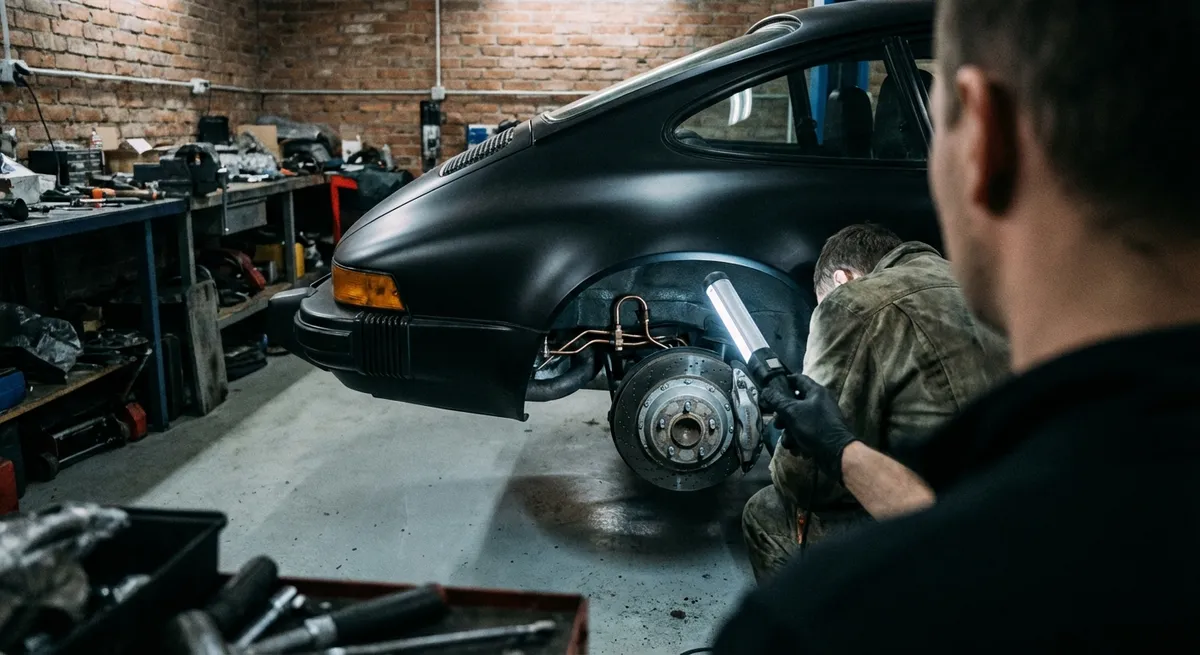
Many services advertise “complimentary brake inspections,” but the depth of those inspections varies dramatically. A discerning owner treats inspections as curated evaluations, not quick visual checks.
A genuinely high-quality brake inspection should include:
- Exact pad thickness measurements (not vague phrases like “looks fine”).
- Rotor thickness and runout measurements against manufacturer limits.
- Brake fluid condition assessment (age, contamination, and preferably boiling point testing).
- Hose and line inspection for cracks, corrosion, bulges, or wet spots.
- Evenness of pad wear side-to-side and corner-to-corner, which can reveal sticking calipers or hardware issues.
- ABS and stability control scan if warning lights have ever appeared, even intermittently.
Asking politely for measured values and technician notes—not just a pass/fail comment—signals that you take brake performance as seriously as the manufacturer intended. Over time, these records help you anticipate maintenance before it becomes urgent, preserving not only safety, but refinement and confidence.
Conclusion
For drivers who prize composure, control, and quiet assurance, brakes are not an afterthought; they are the core of the vehicle’s character. Understanding how this system truly works—and how to interpret its subtle messages—transforms you from a passive user into a curator of your own safety and driving experience.
By treating pedal feel as a diagnostic tool, respecting brake fluid as a critical performance component, decoding noise and vibration, refining your driving style, and demanding curated inspections, you elevate brake care into a deliberate, thoughtful practice. The reward is not just shorter stopping distances, but a driving experience defined by calm precision, even in the moments that matter most.
Sources
- National Highway Traffic Safety Administration (NHTSA) – Brakes and Safety Systems – Overview of braking system safety, ABS, and related technologies from a U.S. government authority.
- U.S. Department of Transportation – Brake Safety Information – General safety guidance and context on vehicle safety systems, including braking, from the DOT.
- Continental Automotive – Brake Systems Technology Overview – Technical insight into modern hydraulic and electronic brake systems from a major OEM supplier.
- Bosch Mobility – Brake Systems and ABS – Detailed explanations of ABS, ESC, and braking technologies from a leading global brake system manufacturer.
- MIT – Understanding Antilock Braking Systems – Educational overview of ABS function and design from an MIT course project, illustrating the principles behind modern brake control.
Key Takeaway
The most important thing to remember from this article is that this information can change how you think about Brake Systems.