The most composed drives are rarely an accident; they are the result of deliberate care, informed decisions, and quiet technical excellence. For the discerning driver, brake repair is not a panicked reaction to a dash light—it is a curated process that protects your time, your vehicle, and the people you carry. This guide moves beyond basic “fix it when it squeals” advice and into the refined details that distinguish routine service from truly masterful brake repair.
Understanding the Entire Brake Experience, Not Just the Parts
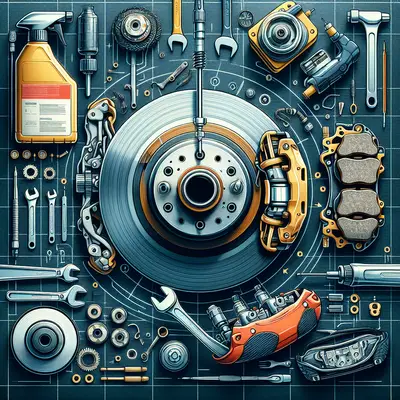
Premium brake repair begins with viewing the system as a complete experience, not a collection of components. Your pads, rotors, calipers, brake fluid, hoses, and even wheels and tires interact in ways that either elevate or undermine your confidence at the pedal. A well-executed repair should deliver three things simultaneously: consistent stopping power, predictable pedal feel, and a quiet, vibration-free response in everyday traffic and in sudden stops. This holistic perspective means your technician is not merely measuring pad thickness; they are evaluating heat patterns on rotors, checking for subtle caliper drag, and assessing whether your brake fluid and hardware can still deliver stable performance in an emergency stop on a hot day.
When you approach brake repair with this broader lens, you graduate from “fixing what’s worn” to actively shaping how your car behaves in real-world situations. The outcome is a braking system that feels composed, linear, and trustworthy—whether you are easing to a gentle stop in a valet lane or making a firm, controlled stop at highway speeds.
Exclusive Insight #1: Evaluating Brake Feel as a Diagnostic Tool
Most drivers notice only two things: “the brakes work” or “something feels off.” A more refined approach treats brake feel itself as a diagnostic tool. The initial bite when you first touch the pedal, the firmness as you continue pressing, and the stability as you hold pressure at a stop all reveal the health of different components. A slightly spongy pedal that firms up when pumped often points toward air in the lines or early fluid degradation; a firm yet low pedal can suggest rear brake adjustment issues or particular types of hydraulic wear.
Before any repair, take note of how the pedal behaves in several conditions: a gentle city stop, a sudden highway slowdown, and a long downhill stretch. Share these precise observations with your technician—where in the pedal travel you feel engagement, any delay before the car responds, or changes after extended braking. This level of feedback allows for targeted diagnostics rather than trial-and-error part replacement, saving time, reducing cost, and preserving the integrity of components that do not actually need to be disturbed.
Exclusive Insight #2: The Critical Role of Brake Fluid Conditioning
Brake fluid is often treated as an afterthought, yet it is the invisible medium that translates your foot’s intent into precise stopping force. Over time, brake fluid absorbs moisture from the air—a process called hygroscopic absorption—which lowers its boiling point and can introduce internal corrosion within lines, calipers, and ABS components. When fluid reaches the wrong side of its service life, hard emergency stops or extended downhill braking can cause it to boil, leading to pedal fade and a disturbing loss of braking authority.
A sophisticated brake repair plan treats brake fluid service not as a “maybe” upsell, but as a scheduled, evidence-based maintenance item. Instead of relying on guesswork, ask your shop whether they use a fluid tester to measure moisture content or boiling point. Request that old fluid be fully flushed from all four corners rather than merely “topped up,” and consider a higher-spec fluid if you frequently tow, drive in mountainous areas, or operate in extreme temperatures. This attention to the fluid’s condition elevates your braking system from good to consistently excellent, especially in high-stress moments when you cannot afford compromise.
Exclusive Insight #3: Hardware, Lubrication, and the Silence of Quality Work
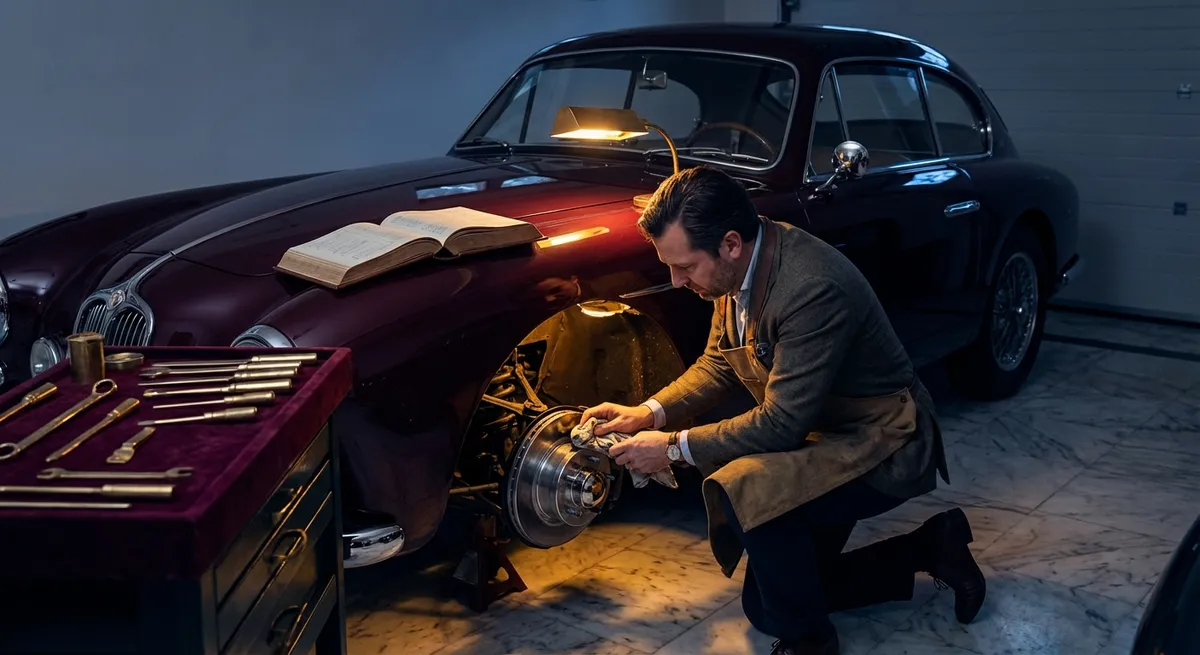
Many brake jobs focus on the obvious—pads and rotors—while quietly neglecting the hardware that governs smooth, even movement. Caliper slide pins, pad abutment clips, shims, and anti-rattle hardware are the unsung conductors behind silent, symmetric braking. When they are cleaned, inspected, and properly lubricated with the correct high-temperature compounds, your brakes engage smoothly, release fully, and resist noise, uneven wear, and dragging.
A premium repair is defined by this meticulous attention to the small pieces. Ask whether the shop replaces or reconditions brake hardware with each pad change, and whether they use manufacturer-approved or high-grade aftermarket clips and shims instead of reusing corroded originals. Quiet operation, consistent pad contact, and longer component life are not accidents; they are the direct result of careful hardware preparation and lubrication that many quick-service operations bypass in the name of speed.
Exclusive Insight #4: Matching Brake Components to Your Driving Profile
Not all brake pads and rotors are created for the same purpose, and simply installing “premium” parts is not enough. The best brake repair is one where the component selection is consciously aligned with how and where you drive. For predominantly urban use with frequent stop-and-go traffic, you may prioritize low noise, low dust, and refined pedal feel. For frequent high-speed highway driving or towing, you may emphasize heat management, fade resistance, and rotor mass.
Discuss with your technician whether ceramic, semi-metallic, or low-metallic pads best complement your driving patterns and vehicle weight. Likewise, consider whether standard rotors are adequate or if high-quality coated rotors would better resist corrosion from road salt and humidity. This tailored approach yields a braking character that feels natural to you, reducing surprises and giving you a more intuitive sense of how your car will respond in everyday and emergency situations.
Exclusive Insight #5: Verifying Work With a Structured Post-Repair Road Test
A truly elevated brake repair experience does not end when the wheels are torqued back on; it concludes with a structured, purposeful road test. This is more than a brief loop around the block. A proper post-repair verification drives through several scenarios: slow stops in a quiet area to listen for new noises, medium-speed stops to feel for pulsation or pulling, and one or two firm, controlled stops from higher speed to confirm stability and straight tracking.
As an owner, you can conduct your own final assessment once you pick up the vehicle. On a safe, open road, check for pedal consistency, steering wheel stability under braking, and any side-to-side drift. Verify that the ABS, if triggered during a firm stop, feels composed and predictable. This test also starts the bedding-in process for new pads and rotors, which is crucial for achieving full performance and minimizing noise. By treating the road test as an essential final step, you ensure the repair is not only technically correct, but also aligned with your expectations for refinement and confidence.
Crafting Your Personal Brake Care Standard
Your brake system is the quiet backbone of every confident journey, from a late-night airport run to a weekend escape on an unfamiliar road. Choosing to elevate your brake repair approach—from listening closely to pedal feel to insisting on fluid testing, meticulous hardware care, tailored components, and a thorough post-repair road test—transforms service from a routine expense into a deliberate safety strategy.
When you engage with your technician using this more informed, precise vocabulary, you also set a higher bar for the quality of work you expect. Over time, this becomes your personal standard: brakes that are not merely “good enough,” but consistently composed, silent, and reassuring. In a world that rewards speed and shortcuts, that level of intentional brake care is a quiet luxury—and a meaningful safeguard.
Sources
- National Highway Traffic Safety Administration (NHTSA) – Brakes and Safety - Federal guidance on brake system safety, performance, and common issues
- U.S. Department of Transportation – Brake Fluid Safety Information (FMVSS 116) - Technical standards and specifications for motor vehicle brake fluids
- AAA – Brake System Service and Maintenance - Consumer-focused overview of brake components, symptoms, and service expectations
- Carnegie Mellon University – Basics of Braking and Vehicle Dynamics - Educational material on how braking systems affect vehicle behavior and stopping performance
- Bosch Automotive – Brake System Components and Technology - Manufacturer insights into modern brake components, materials, and quality considerations
Key Takeaway
The most important thing to remember from this article is that this information can change how you think about Repair Guides.